Gold Refineries in Ghana | 2026 Guide to Licensed Refiners
Ghana is Africa’s leading gold producer, and for most of its history it shipped that gold out as raw doré and let refineries abroad collect the profit. In 2026, that is changing quickly. A state gold agency, new supply contracts, a ban on exporting unrefined artisanal gold, and a push for international accreditation are reshaping where Ghanaian gold is refined and who can buy it.
If you are searching for gold refineries in Ghana, you are probably in one of four groups: a buyer comparing sources, an investor tracking policy, an exporter who needs to understand the new rules, or someone trying to avoid a scam. This guide is written for all four. It covers the refineries operating today, what the government’s refining rules mean in practice, how accreditation works, how to verify a refinery or seller, and what European buyers in particular should check before any money moves.
A note on sources: refinery capacities, ownership, and policy details in Ghana are changing month to month, and some figures differ between reports. Where numbers are stated below, they are as reported by the Ghanaian government and news sources in 2026. Always confirm current details directly with the refinery and the regulator before transacting.
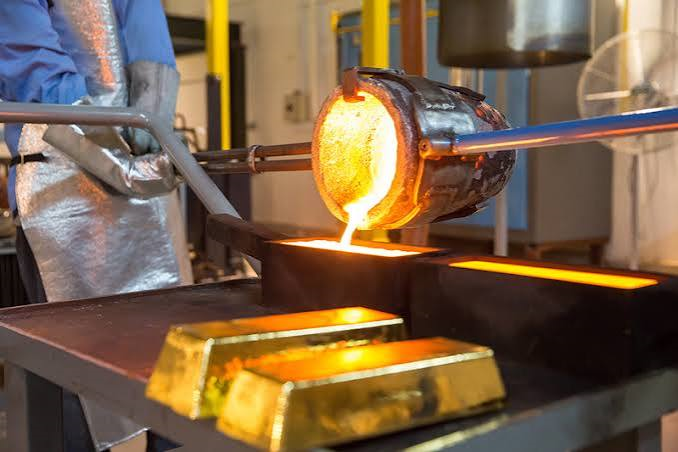
note
- Ghana reportedly has four licensed gold refineries: Gold Coast Refinery, Royal Ghana Gold Refinery, Sahara Royal Gold Refinery, and IPM KAL Ghana.
- The Ghana Gold Board (GoldBod) signed refining agreements with Gold Coast Refinery (January 2026) and Royal Ghana Gold Refinery (May 2026), each for up to about one tonne of gold a week.
- From 1 September 2026, GoldBod announced a ban on exporting unrefined artisanal gold doré bought under approved offtake arrangements.
- No Ghanaian refinery is LBMA accredited yet. Gold Coast Refinery is working with South Africa’s Rand Refinery toward that goal.
- Buyers should verify the refinery, the seller, the paperwork, and the payment route independently. A refinery’s name appearing in an offer does not prove the seller is connected to it.
Why Ghana Matters in the Global Gold Market
Ghana has long ranked among the world’s major gold producers and is the largest in Africa. Its gold comes from two very different sources.
The first is large-scale mining: industrial operations run by international and domestic companies, which have historically sold doré to refiners overseas under their own arrangements. The second is artisanal and small-scale mining (ASM), often called galamsey when unlicensed. ASM contributes a substantial share of national output and has traditionally been harder to track, which is one reason the government created GoldBod and began channeling ASM gold through approved buyers.
For refiners, Ghana is attractive because supply is large and close to home. For buyers, it is attractive for the same reason, but it also carries compliance risk. Gold from ASM supply chains attracts scrutiny from banks, regulators and bullion associations because of concerns around illegal mining, environmental damage, smuggling and weak traceability. That is exactly the problem the new refining regime is designed to address.
If you are comparing Ghana with other African producers, see our guides to gold refineries in Uganda and gold refineries in Kenya.
Gold Refineries in Ghana at a Glance
| Refinery | Based in | Reported capacity | Status in 2026 |
| Gold Coast Refinery | Accra area | Stated up to 2 tonnes per week | Operating since 2016; supply agreement with GoldBod; technical partnership with Rand Refinery |
| Royal Ghana Gold Refinery | Accra | About 400 kg per day | Inaugurated August 2024; supply agreement with GoldBod signed May 2026 |
| Sahara Royal Gold Refinery | Ghana | Not publicly confirmed | Reported as licensed; no public GoldBod supply deal reported |
| IPM KAL Ghana | Ghana | Not publicly confirmed | Reported as licensed; no public GoldBod supply deal reported |
Treat this table as a starting point, not a final due-diligence file. Capacity figures are stated capacities, not guaranteed output, and a refinery’s actual throughput depends on equipment, power, supply and permits.
Gold Coast Refinery
Gold Coast Refinery is the best known and most established refinery in Ghana. It opened in 2016 and has been described in Ghanaian press as the largest refinery in West Africa and one of the biggest on the continent. Its leadership has described a capacity of up to two tons of gold a week, although earlier reports cited daily figures of roughly 480 to 500 kilograms under a single shift.
The GoldBod agreement
In January 2026, GoldBod signed a refining agreement with Gold Coast Refinery. Under the arrangement, the refinery receives doré purchased by GoldBod from the artisanal and small-scale sector and refines it into bullion before export. Reports say the supply starts at about one tons per week, even though the refinery says it can process more.
Two features of the deal matter to anyone following Ghana’s gold sector:
- State participation. Ghana, through GoldBod, holds a 15 percent free carried interest in the refinery, and GoldBod retains ownership of the refined bullion.
- Branding and traceability. Reports say each refined bar carries marks linked to GoldBod, the Ghana Standards Authority, the Bank of Ghana, and the refinery itself. That kind of layered marking is intended to make origin easier to prove.
The Rand Refinery partnership
Gold Coast Refinery works with Rand Refinery of South Africa, the only LBMA-accredited refinery in Africa, which provides technical and commercial support. The aim is to help Gold Coast meet the audited standards required for LBMA accreditation. The partnership has been publicly welcomed by LBMA leadership, but no accreditation timetable has been published, and being supported by an accredited refiner is not the same as being accredited.
Purity
With Rand Refinery’s technical backing, Gold Coast Refinery is reported to refine doré to 999.9 fineness, commonly called “four nines” gold. Always ask for the assay certificate for the specific bar or batch you are considering rather than relying on a general claim about the refinery.
Royal Ghana Gold Refinery
Royal Ghana Gold Refinery was inaugurated in August 2024 and is notable because the Bank of Ghana holds a stake in it. Reports describe the central bank’s involvement as intended to strengthen regulatory oversight and support the national value addition agenda. Sources differ on whether the stake is a majority or minority holding, so check the current shareholding directly if it matters to your due diligence.
Its reported theoretical capacity is around 400 kilograms per day. In April 2026, GoldBod’s CEO toured the facility and the government said additional equipment was still needed for it to run at full capacity. On 25 May 2026, GoldBod signed a refining agreement under which it can supply up to one metric ton of gold per week to the refinery.
The refinery’s management has said it is ready to begin operations at scale and aligns its plans with the government’s 24-hour economy programme, which is intended to create jobs. Like Gold Coast Refinery, Royal Ghana Gold is reported to be working toward LBMA accreditation, with regulatory guidance from GoldBod. Officials have spoken of a three- to five-year horizon, which is a realistic reminder that accreditation is a long process.
Other Licensed Refineries: Sahara Royal Gold and IPM KAL Ghana
Press reports in 2026 list two further licensed refineries: Sahara Royal Gold Refinery and IPM KAL Ghana. Unlike Gold Coast and Royal Ghana Gold, no public supply agreement with GoldBod has been reported for them. That does not mean they are inactive or illegitimate. It does mean there is less public information available, so extra verification is sensible before you deal with anyone claiming to represent them.
If you are researching these facilities, ask for their current operating license, the regulator that issued it, their assay and quality procedures, and their audit history. A genuine refinery should be able to provide this quickly.
GoldBod and the 2026 Local Refining Rule
The Ghana Gold Board, known as GoldBod, is the state agency set up to regulate and participate in Ghana’s gold trade, especially the artisanal sector. Its central goal is value addition: keep more of the refining fees and economic benefit inside Ghana instead of paying them to refineries in places such as Dubai, India and Switzerland, as officials have described.
What changed
GoldBod announced that from 1 September 2026, unrefined artisanal doré purchased under approved off-take arrangements may not be exported and must be refined locally first. Officials have also set a longer-term ambition that all minerals mined in Ghana are refined locally before export by 2030. Separately, Ghana began purchasing a share of large-scale mining output through GoldBod from 1 July 2026 under an agreement with the Chamber of Mines, and the CEO has spoken of plans for a very large refinery of up to 600 tons capacity, with construction targeted to start in 2026 and finish in 2027. Treat that last item as an announced plan, not a delivered facility.
What it means for different readers
For exporters and licensed buyers: doré cannot simply be loaded for export in the way it once was. Make sure your supply is covered by the proper licenses and that refining is arranged through an approved channel.
For international buyers: more Ghanaian gold should arrive as refined, marked bullion with clearer paperwork, which helps compliance. But the rule applies to specific supply channels, and capacity is limited. Be skeptical of anyone who promises large quantities of Ghanaian gold bars on short notice.
For investors and analysts: watch three things: whether refinery throughput actually reaches the announced volumes, whether the two non-contracted refineries get supply arrangements, and whether any Ghanaian refinery reaches LBMA accreditation.
LBMA Accreditation: Why It Matters and Where Ghana Stands
The London Bullion Market Association sets the standards that most large institutional buyers rely on. Bars from LBMA-accredited refiners, listed on the Good Delivery List, are accepted by banks, bullion dealers and vaults worldwide with little friction. Bars from non-accredited refiners can still be legitimate and valuable, but they often face extra assay checks, discounts or outright refusal from institutional buyers.
To be accredited, a refinery must pass independent audits covering assaying quality, bar production standards, anti-money-laundering controls and responsible sourcing under the LBMA’s Responsible Gold Guidance. For artisanal-sourced material, the sourcing requirements are especially demanding.
Ghana’s position in 2026 is working toward accreditation, not yet there. Gold Coast Refinery has Rand Refinery’s technical support, Royal Ghana Gold has said it is pursuing the same goal, and GoldBod has said it will back refineries on the path. Officials have talked about a three- to five-year timeline. Until a Ghanaian refinery appears on the LBMA’s published list, you should not accept claims that a bar is “LBMA certified” simply because it was refined in Ghana or by a refinery with an accredited partner.
Doré vs Refined Gold: Know What You Are Buying
Much of the confusion in the gold trade comes from mixing up product types.
- Doré is semi-pure gold, usually from a mine or artisanal processor, containing gold plus silver and other metals. Its gold content varies widely and must be assayed.
- Refined bullion is gold brought to a defined purity, typically 995 or 999.9 fineness, and stamped by a refinery.
- Good Delivery bars are large bars, normally around 400 troy ounces, produced by LBMA-accredited refiners to strict specifications.
- Small bars and kilo bars are widely traded by retail and wholesale dealers and may come from accredited or non-accredited refiners.
If an offer says “Ghana gold bars” without stating purity, refiner, serial numbers, and assay documentation, you do not yet have an offer. You have a claim.
How to Verify a Gold Refinery or Seller in Ghana
Use this checklist before sending money or travelling to inspect gold.
- Confirm the company exists. Check registration through Ghana’s Registrar of Companies and request a certificate of incorporation, tax number, and a physical address you can verify.
- Check licenses with the regulator. Ask for refinery or trading licenses and confirm them with GoldBod or the relevant Ghanaian authority, using contact details you find yourself, not those supplied by the seller.
- Confirm the link between seller and refinery. A seller quoting a refinery’s name is not the refinery. Contact the refinery through its official website or switchboard and ask whether this person is authorized.
- Ask for the assay report and bar details. You need fineness, weight, serial numbers, and the refiner’s hallmark. Check these against the physical bars through an independent assayer.
- Check origin and sourcing paperwork. Ask for export permits, proof of lawful sourcing, and evidence that the gold complies with the local refining rules.
- Use a neutral inspection point. Where possible, inspect and test the gold at a bank, a recognized vault, or an independent lab, not in a hotel room or private house.
- Never pay unusual upfront fees. Demands for “clearance fees”, “export taxes” or “security deposits” before delivery are a classic warning sign.
- Use protected payment. Documentary credits, escrow through a regulated institution, or payment on verified delivery are safer than wire transfers to a stranger.
- Keep records. Written agreements, identity checks and a full audit trail protect you if something goes wrong and satisfy your own bank.
- Take professional advice. A lawyer familiar with commodity transactions in Ghana and your own country is worth the cost.
Our guide to documents required to export gold from Kenya shows how a proper documentary trail looks in a neighboring market.
Export Documents and Compliance in Ghana
Ghanaian gold exports are regulated, and the exact requirements change, so confirm them with GoldBod, the Minerals Commission and customs before you rely on any list. In general, a lawful export trail involves:
- A valid license or authorization to trade or export gold
- Proof of lawful origin of the gold
- An assay certificate and weight documentation
- Commercial invoice, packing list and export declaration
- Compliance with the local refining requirement where it applies
- Insurance and secure logistics arrangements
Buyers in Europe should also be ready for their own side of the chain: customs declarations on import, anti-money-laundering checks by their bank, and tax treatment of investment gold. Requirements differ between the UK and EU member states, so check local rules before ordering.
What European Buyers Should Know
European buyers tend to ask more questions than buyers in other regions, and they should. Regulators in the UK and EU take due diligence seriously, and banks can freeze or refuse transactions they cannot document.
Provenance matters more than price. A discount on Ghanaian gold that cannot be traced to a lawful source is not a bargain. It is a liability. EU rules on responsible sourcing and anti-money-laundering expect buyers to know where their gold comes from.
Accreditation affects resale. If you plan to resell, store in a vault, or use gold as collateral, non-accredited bars may be harder to place. Ask yourself who your eventual buyer will be before you choose a source.
Tax treatment varies. Investment gold is VAT-exempt in many European countries under specific purity and form rules, but import duties, reporting thresholds, and treatment of other gold products differ. Speak to a tax adviser in your country.
Consider established channels. For many European buyers, purchasing refined bars through regulated bullion dealers is simpler and safer than direct imports from West Africa. Direct sourcing from Ghana makes sense mainly for professional buyers with proper compliance teams.
Common Scams in Ghana’s Gold Trade
Ghana’s gold reputation has been exploited by fraudsters for years, and the new refining rules have not ended that. Be alert to:
- Fake gold or gilded bars sold at below-market prices
- Advance-fee demands for fees, taxes, or permits that never end
- Forged documents, including fake assay certificates and permits
- Impersonation of real refineries, using real names with fake contact details
- Pressure and secrecy, such as urgent deadlines or instructions not to contact the regulator
- Meeting in unsafe or private locations instead of a bank, vault, or lab
If a deal feels rushed, secretive, or too cheap, walk away. Genuine gold sellers expect scrutiny.
Frequently Asked Questions
How many gold refineries are there in Ghana?
Reports in 2026 describe four licensed refineries: Gold Coast Refinery, Royal Ghana Gold Refinery, Sahara Royal Gold Refinery and IPM KAL Ghana. Only the first two have publicly reported supply agreements with GoldBod.
Which is the biggest gold refinery in Ghana?
Gold Coast Refinery is generally described as the largest, with a stated capacity of up to two tons a week. Royal Ghana Gold Refinery has a reported capacity of around 400 kilograms a day.
Is any Ghanaian refinery LBMA accredited?
Not as of November 2026. Gold Coast Refinery is working with Rand Refinery toward accreditation, and Royal Ghana Gold has said it has the same ambition, but no timetable has been published.
What is GoldBod?
GoldBod is the Ghana Gold Board, the state agency that regulates and participates in Ghana’s gold trade, particularly the artisanal and small-scale sector. It signs supply agreements with refineries and sets policy on local refining.
Can I export raw gold from Ghana?
From 1 September 2026, GoldBod announced that unrefined artisanal doré bought under approved off-take arrangements must be refined locally before export. Rules for other supply channels differ, so check the current position with the regulator.
Is Ghanaian gold safe to buy?
It can be, if you buy from verified, licensed sources with full documentation, independent assay and protected payment. Risk rises sharply with unverified sellers, missing paperwork and unusual payment demands.
Can European buyers import gold from Ghana?
Yes, in principle, but they must meet export rules in Ghana and import, customs, tax and anti-money-laundering rules in their own country. Professional advice is strongly recommended.
What purity does Ghanaian refined gold reach?
Gold Coast Refinery is reported to refine to 999.9 fineness. Always confirm the purity of the specific bars with an independent assay.
How is refined gold different from doré?
Doré is semi-pure gold with variable gold content. Refined bullion has been processed to a defined purity and is stamped by the refinery.
How do I check whether a refinery is legitimate?
Verify company registration, licences with the regulator, the seller’s authority to act for the refinery, and independent assay results. Use contact details you find yourself, not those given by the seller.
Conclusion
Ghana’s gold sector is in the middle of a genuine shift. Two refineries now have state supply agreements, a local refining rule is in force for artisanal doré, and accreditation is the next big goal. Yet the same period is full of unverified offers, optimistic announcements, and capacity claims that have not yet been tested in practice.
The sensible approach for any buyer, investor or exporter is simple: rely on documents, verify independently, never pay upfront for access, and treat accreditation claims with care until a refinery appears on an official list. For more regional comparisons, explore our guides to gold refineries in Uganda, gold refineries in Kenya, and documents required to export gold from Kenya.
note: This article is for general information only and is not legal, tax or investment advice. Refinery details and regulations change; confirm current facts with the refinery and the relevant authorities before transacting.
By [Julio Jeputagati], [Buy Gold Bars Kenya Limited] | Last updated: November 2026