
Table of Contents
- Introduction to Gold in Kenya
- History of Gold Mining in Kenya
- Major Gold Mining Regions in Kenya
- Types of Gold Found in Kenya
- Gold Purity Standards in Kenya
- Gold Prices in Kenya Today
- How Gold Is Bought and Sold in Kenya
- Gold Refining in Kenya
- Gold Export Process from Kenya
- Taxes, Royalties, and Fees on Gold in Kenya
- Common Risks and Scams in the Kenyan Gold Market
- Comparison: Gold in Kenya vs Neighboring Countries
- Legal Requirements for Gold Trading in Kenya
- How to Buy Gold Safely in Kenya
- Investment Opportunities in Kenya’s Gold Sector
- Future of Gold Mining and Trade in Kenya
- Conclusion:
Gold in Kenya| Guide to Mining, Buying, Selling, Prices, and Export (2026)
Gold in Kenya has become one of the most discussed and promising mineral sectors in East Africa. With rising global gold prices, increasing regional demand, and renewed government focus on formalizing mining and exports, Kenya is steadily positioning itself as an important gold-producing and trading hub. From artisanal miners in western Kenya to licensed dealers in Nairobi and international buyers in Dubai, India, and Asia, the Kenyan gold ecosystem is expanding every year.
This article is written from practical African gold trade experience, supported by technical expertise, official regulatory references, and transparent, trust-based information. It is designed for investors, miners, sellers, buyers, exporters, and researchers who want a complete, legally accurate, and market-relevant understanding of gold in Kenya.
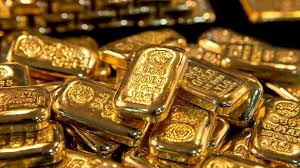
Overview of Gold in Kenya
Kenya’s gold sector is dominated by artisanal and small-scale mining (ASM), although exploration by international companies continues to identify large-scale potential. Gold production is largely concentrated in western Kenya, close to the Uganda and Tanzania gold belts, which are geologically rich in gold-bearing greenstone formations.
Key characteristics of Kenya’s gold market include:
- Predominantly artisanal mining
- Growing formalization through licensing
- Strong export demand
- Increasing government oversight under the Mining Act
Gold in Kenya is traded in various forms, including gold ore, gold dust, gold nuggets, and gold doré bars.
History of Gold Mining in Kenya
Gold mining in Kenya dates back to the early 20th century during the colonial period. The Kakamega Goldfields were first discovered in the 1930s and became Kenya’s earliest commercial gold mining area. Over time, mining activity declined due to limited investment and infrastructure.
In recent decades, rising gold prices and regional discoveries in Uganda and Tanzania reignited interest in Kenyan gold. Artisanal mining expanded rapidly, prompting the government to introduce stricter regulations to curb illegal mining, environmental degradation, and smuggling.
Today, Kenya is transitioning from informal gold extraction toward a more structured and regulated gold economy.
Major Gold Mining Regions in Kenya
1. Kakamega County
Kakamega is Kenya’s most famous gold-producing region. It hosts several active artisanal mines and has attracted international exploration companies. Gold here is typically found in quartz veins and alluvial deposits.
2. Migori County
Migori is one of the highest gold-producing counties in Kenya. Mining is widespread, with thousands of small-scale miners extracting gold using traditional methods. Gold from Migori is commonly traded in gold dust and doré form.
3. Siaya County
Siaya lies within the Lake Victoria gold belt and shares geological similarities with gold-rich regions of Uganda and Tanzania.
4. Narok County
Narok has emerging gold prospects, particularly in alluvial deposits. Mining activity is smaller but growing.
5. Turkana (Exploration Stage)
Turkana is under exploration for multiple minerals, including gold, although commercial production is still limited.
Types of Gold Found in Kenya
Gold in Kenya is available in different physical forms, each affecting pricing, purity, and export requirements:
| Type of Gold | Description | Common Locations in Kenya | Typical Purity Range | Commercial Use |
| Alluvial Gold | Gold particles found in riverbeds and sediments are formed by the erosion of primary gold sources | Migori, Siaya, Kakamega, Tana River Basin | 18K – 24K | Artisanal mining, small-scale trading |
| Lode (Hard Rock) Gold | Gold embedded in solid rock, extracted through underground or open-pit mining | Migori (Macalder), Kakamega, Vihiga | 20K – 24K | Large-scale mining, export |
| Placer Gold | Concentrated gold nuggets and flakes in soil and gravel deposits | Migori, Nyanza region, Western Kenya | 18K – 23K | Local trade, refining |
| Gold Nuggets | Naturally occurring solid pieces of gold | Migori, Kakamega | 22K – 24K | Investment, collectors, refining |
| Gold Dust | Fine gold particles mixed with sand or soil | Migori, Siaya, Kakamega | 18K – 22K | Refining, bullion production |
| Quartz Vein Gold | Gold trapped within quartz veins | Kakamega, Migori | 20K – 24K | Industrial mining, refining |
| Reef Gold | Gold is found in mineralized rock reefs | Migori Belt | 20K – 24K | Export, refining |
Gold Purity Standards in Kenya
Gold purity in Kenya is measured and regulated to ensure transparency, fair trade, and buyer protection. Purity refers to the percentage of pure gold in a gold product and is expressed in karats (K) or fineness ‰). Kenyan gold sold locally or for export must meet specific assay and certification requirements set by authorized institutions.
Gold Purity Measurement System
Kenya follows international gold purity standards, using:
- Karats (K): Measures gold purity out of 24 parts
- Fineness ‰): Measures purity in parts per thousand
| Karat | Fineness | Gold Content (%) |
| 24K | 999–999.9 | 99.9% – 99.99% |
| 22K | 916 | 91.6% |
| 21K | 875 | 87.5% |
| 18K | 750 | 75.0% |
| 14K | 585 | 58.5% |
Common Gold Purity Levels Found in Kenya
- 24K (999) – Predominant in mining regions; preferred for exports and bullion
- 22K (916) – Common in gold bars and some jewelry
- 18K (750) – Mostly used in jewelry and retail markets
- Below 18K – Rare in raw gold; mainly found in finished jewelry
Regulatory Bodies Responsible for Gold Purity
Gold purity verification in Kenya is overseen by:
- Ministry of Mining, Blue Economy & Maritime Affairs
- Kenya Bureau of Standards (KEBS) – sets and enforces quality standards
- Government-licensed assayers and refineries
- Customs authorities for export compliance
All exported gold must be assayed, certified, and sealed by approved entities.
Gold Assaying and Certification Process
To confirm purity, gold in Kenya undergoes:
- Sampling – A small portion taken from the gold
- Laboratory Assay – Fire assay or XRF testing
- Issuance of Assay Certificate – Indicates purity, weight, and origin
- Sealing & Documentation – Required for trade and export
An official assay report is mandatory for:
- Large transactions
- International buyers
- Export permits
Gold Export Purity Requirements
For export from Kenya:
- Minimum accepted purity is typically ≥ 92% (22K)
- Most buyers prefer 24K (999) gold bars or dore bars
- Export documents must match the certified purity
Gold that fails to meet declared purity may be rejected or re-assayed.
Penalties for Non-Compliance
Selling or exporting gold with false purity claims may result in:
- Confiscation of gold
- Heavy fines
- Export bans
- Criminal prosecution under Kenyan mining laws
How Buyers Can Verify Gold Purity in Kenya
Buyers are advised to:
- Demand an official assay certificate
- Verify seals and serial numbers
- Use licensed dealers only
- Avoid deals without documentation
Gold Prices in Kenya
Gold Prices in Kenya (Indicative Market Range)
| Gold Purity | Price per Gram (USD) | Price per 10 Grams (USD) | Price per 100 Grams (USD) | Price per 1 KG (USD) |
| 24K (99.9%) | $95 – $100 | $950 – $1,000 | $9,500 – $10,000 | $95,000 – $100,000 |
| 22K (91.6%) | $90 – $95 | $900 – $950 | $9,000 – $9,500 | $90,000 – $95,000 |
| 21K (87.5%) | $88 – $92 | $880 – $920 | $8,800 – $9,200 | $88,000 – $92,000 |
| 18K (75.0%) | $87 – $90 | $870 – $900 | $8,700 – $9,000 | $87,000 – $90,000 |
Notes:
- Prices are indicative market ranges and may vary based on location (Nairobi, Migori, Kakamega), quantity, and purity verification.
- 24K gold commands the highest price and is preferred for export and investment.
- Prices may exclude assaying, refining, transport, and export documentation costs.
- Bulk purchases often attract better negotiated rates.
How Gold Is Bought and Sold in Kenya
Gold trading in Kenya involves a regulated process designed to protect miners, dealers, and buyers while ensuring compliance with national mining and export laws. The process applies to artisanal miners, licensed dealers, local buyers, and international exporters.
1. Gold Production and Sourcing
Gold in Kenya is sourced from:
- Artisanal and small-scale miners (ASM)– common in Migori, Kakamega, Siaya, and Vihiga
- Licensed mining companies – operating under approved mining leases
Gold is typically sold in the form of:
- Gold dust
- Nuggets
- Doré bars
- Refined bars
2. Licensing and Legal Compliance
Before buying or selling gold, parties must be licensed under the Mining Act, 2016.
Required licenses include:
- Miner’s License – for extraction
- Gold Dealer’s License – for buying and selling
- Export Permit – for international trade
Unlicensed trading is illegal and may result in confiscation or prosecution.
3. Gold Buying Process in Kenya
Step 1: Seller Identification
The seller must provide:
- National ID or passport
- Proof of source (mine location or supply chain record)
Step 2: Gold Testing and Assaying
Gold purity is verified using:
- XRF testing
- Fire assay (laboratory confirmation)
An assay report confirms:
- Purity (karat/fineness)
- Gross and net weight
Step 3: Price Negotiation
Pricing is based on:
- International gold spot price
- Verified purity
- Quantity and form (dust, nuggets, bars)
- Local market demand
Step 4: Payment
Payment methods include:
- Bank transfer
- Mobile money (for small transactions)
- Cash (regulated and limited)
Transactions must follow anti-money laundering (AML) rules.
4. Gold Selling Process in Kenya
Sellers can sell gold to:
- Licensed local dealers
- Refiners
- Exporters
Each sale must include:
- Assay certificate
- Sales invoice
- Dealer license verification
5. Exporting Gold from Kenya
To export gold legally, the following are required:
- Assay certificate from an approved laboratory
- Export permit from the Ministry of Mining
- Customs clearance (KRA)
- Packing list and commercial invoice
- Payment of royalties and export taxes (where applicable)
Most export buyers require 22K–24K purity.
6. Role of Government and Regulators
Key institutions involved:
- Ministry of Mining, Blue Economy & Maritime Affairs
- Kenya Revenue Authority (KRA)
- Kenya Bureau of Standards (KEBS)
- Licensed assayers and refineries
These bodies ensure transparency, taxation, and compliance.
7. Risks and Best Practices
Common Risks:
- Fake or diluted gold
- Unlicensed brokers
- False assay reports
- Payment fraud
Best Practices:
- Trade only with licensed dealers
- Insist on official assay reports
- Avoid deals without documentation
- Use escrow or bank-verified payments for large volumes
Legal Framework Governing Gold in Kenya
Gold mining and trading are regulated under:
- Mining Act, 2016
- Ministry of Mining, Blue Economy & Maritime Affairs
- Kenya Revenue Authority (KRA)
Required Licenses
- Artisanal Mining Permit
- Dealer’s License
- Export Permit
Operating without licenses is illegal and punishable by law.
Gold Export Process from Kenya
Exporting gold from Kenya is a regulated activity governed by the Mining Act, 2016, and overseen by government authorities to ensure legality, quality assurance, and revenue compliance. All gold exports must follow strict documentation, assaying, and clearance procedures.
1. Source Verification of Gold
Before export, the exporter must prove the gold was sourced legally. This includes:
- Mine origin details (location and license)
- Purchase records or supply agreements
- Seller identification documents
Gold from unlicensed sources is not permitted for export.
2. Licensing Requirements
An exporter must hold:
- Valid Gold Dealer/Exporter License issued by the Ministry of Mining
- Tax compliance certificate (KRA)
Without these licenses, export approval will be denied.
3. Gold Assaying and Certification
Assay Process:
- Gold samples are tested by a government-approved laboratory
- Methods include Fire Assay or XRF testing
Assay Certificate Confirms:
- Gold purity (karat/fineness)
- Net weight
- Type of gold (doré, bar, dust)
Most export buyers require 22K–24K (92%) purity.
4. Refining (If Required)
If gold does not meet buyer or export purity standards:
- It must be refined to the required purity level
- Refining is done by licensed local or regional refineries
- A new assay certificate is issued after refining
5. Export Permit Application
The exporter applies for an Export Permit from the Ministry of Mining by submitting:
- Assay certificate
- Dealer/exporter license
- Commercial invoice
- Packing list
- Proof of royalty or levy payment (if applicable)
Approval timelines vary but are mandatory before shipment.
6. Payment of Royalties and Taxes
Exporters must pay:
- Government royalty (as prescribed)
- Any applicable export levies or fees
Payment receipts are required for customs clearance.
7. Customs Clearance (KRA)
At the port of exit (airport or border):
- Documents are verified by Kenya Revenue Authority (KRA)
- Physical inspection may be conducted
- Export declaration is approved
8. Shipment and Logistics
Gold is shipped via:
- Secure air freight (preferred)
- Licensed logistics or armored transport providers
Packaging must be:
- Sealed
- Tamper-proof
- Clearly labeled
9. Buyer Documentation and Delivery
Exporters provide buyers with:
- Assay certificate
- Commercial invoice
- Export permit
- Certificate of origin (if required)
Delivery timelines depend on destination and logistics provider.
10. Compliance and Penalties
Non-compliance may result in:
- Confiscation of gold
- Export license suspension
- Fines or prosecution
- Blacklisting from future exports
Taxes, Royalties, and Fees
Taxes, Royalties, and Fees on Gold in Kenya
| Charge Type | Applicable Rate | Who Pays | Paid To | Notes |
| Mineral Royalty (Gold) | 5% of gross sales value | Miner / Exporter | Government of Kenya | Mandatory before export approval |
| Export Permit Fee | Fixed (as prescribed) | Exporter | Ministry of Mining | Required for each shipment |
| Assay & Certification Fee | Variable (by lab & quantity) | Exporter | Licensed Assay Laboratory | Required to verify purity and weight |
| Refining Fee | Variable (by purity & weight) | Exporter / Seller | Licensed Refinery | Applies if gold needs upgrading |
| Customs Processing Fee | As per the KRA tariff | Exporter | Kenya Revenue Authority (KRA) | Paid during customs clearance |
| Withholding Tax (if applicable) | As prescribed by KRA | Seller | KRA | Applies to certain transactions |
| Value Added Tax (VAT) | Exempt / Zero-rated (exports) | — | — | Gold exports are VAT-exempt |
| Logistics & Security Fees | Market-based | Exporter | Logistics Provider | Secure transport & insurance |
| License Renewal Fee | Annual fixed fee | Dealer / Exporter | Ministry of Mining | Required to maintain legality |
Notes:
- Royalty payment is compulsory before export.
- All fees must be officially receipted and documented.
- VAT does not apply to gold exports, but local sales may differ.
Common Risks and Scams in the Kenyan Gold Market
Kenya’s gold sector offers strong opportunities, but it also attracts fraudsters targeting local and international buyers. Understanding the most common risks and scams is essential for safe and compliant gold trading.
1. Fake or Gold-Plated Material
How it works:
Scammers present brass, copper, or tungsten-based metal coated with gold as high-purity gold.
Red flags:
- Refusal to allow independent testing
- Unrealistically high purity claims
- Inconsistent weight vs size
Prevention:
Always insist on XRF or fire assay testing from a licensed laboratory.
2. False Assay Reports
How it works:
Forged or altered assay certificates are used to claim 22K–24K purity when the gold is lower grade.
Red flags:
- Assay reports without lab contact details
- No government-approved stamp or serial number
Prevention:
Verify assay reports directly with the issuing laboratory or regulator.
3. Unlicensed Brokers and Middlemen
How it works:
Unregistered individuals pose as agents or exporters, collect deposits, then disappear.
Red flags:
- No dealer/exporter license
- Pressure to rush transactions
- Requests for cash payments only
Prevention:
Trade only with licensed gold dealers and exporters.
4. Advance-Fee Fraud
How it works:
Buyers are asked to pay “documentation,” “transport,” or “release” fees before seeing or testing the gold.
Red flags:
- Multiple upfront fees
- No physical inspection allowed
- Constant new charges
Prevention:
Never pay fees without verified gold, contracts, and documentation.
5. Quantity and Weight Manipulation
How it works:
Weights are inflated or altered after testing, especially with gold dust.
Red flags:
- Use of uncalibrated scales
- Changing weights during handling
Prevention:
Use sealed, calibrated digital scales and record weights officially.
6. Export Permit and Customs Scams
How it works:
Fraudsters claim they can “fast-track” export permits or bypass taxes.
Red flags:
- Claims of avoiding government procedures
- Fake export permits
Prevention:
Apply for permits directly through the Ministry of Mining and KRA.
7. Payment and Banking Fraud
How it works:
Fake bank transfer confirmations or chargebacks after gold delivery.
Red flags:
- Screenshots instead of bank confirmation
- Pressure to release gold before funds clear
Prevention:
Confirm cleared funds with your bank before releasing gold.
8. Misrepresentation of Gold Origin
How it works:
Gold from illegal or conflict sources is falsely claimed as Kenyan-origin gold.
Risk:
Confiscation, export rejection, and legal penalties.
Prevention:
Demand proof of origin and mine documentation.
9. Underpricing and Too-Good-to-Be-True Deals
How it works:
Gold is offered far below market price to lure buyers quickly.
Red flags:
- Prices far below the global spot price
- Urgent or secretive deals
Prevention:
Compare offers with current market prices and verified sellers.
10. Document Forgery
How it works:
Fake licenses, invoices, or certificates of origin are used.
Prevention:
Cross-check documents with issuing authorities.
Best Practices to Avoid Scams
- Work only with licensed dealers and exporters
- Conduct independent assay testing
- Use written contracts and invoices
- Avoid cash-only transactions
- Verify documents with authorities
- Never rush high-value deals
Gold Refining in Kenya
Gold refining in Kenya is the process of purifying raw gold to remove impurities and achieve internationally accepted purity standards. Refining is essential for export compliance, investment-grade bullion production, and buyer confidence. The process is regulated by the government to ensure quality, traceability, and transparency.
1. Sources of Gold for Refining
Gold refined in Kenya typically comes from:
- Artisanal and small-scale miners (ASM)
- Licensed mining companies
- Gold dealers and exporters
Raw gold may be in the form of:
- Gold dust
- Nuggets
- Doré bars
- Concentrates
2. Regulatory Framework
Gold refining in Kenya is governed by:
- Mining Act, 2016
- Oversight by the Ministry of Mining, Blue Economy & Maritime Affairs
- Compliance with Kenya Bureau of Standards (KEBS)
Only licensed refineries and approved facilities are legally allowed to refine gold.
3. Gold Refining Process in Kenya
Pre-Refining Testing (Assay)
- Gold is tested using XRF or fire assay
- Determines initial purity and impurity levels
Smelting
- Raw gold is melted at high temperatures
- Fluxes are added to separate impurities
- Produces doré bars
Chemical Refining
Common methods include:
- Aqua regia refining – dissolves gold for high-purity output
- Electrolytic refining – used for large-scale refining
This stage raises purity to 99.5%–99.99% (24K).
Final Assay and Certification
- Refined gold is retested
- Official assay certificate is issued
- Bars are stamped with weight and purity
4. Purity Standards Achieved
| Refined Gold Type | Purity Level | Common Use |
| Investment-Grade Gold | 99.5% – 99.99% | Export & bullion |
| Jewelry Gold | 75% – 91.6% | Manufacturing |
| Doré Bars | 80% – 95% | Further refining |
5. Role of Gold Refineries
Licensed refineries in Kenya:
- Upgrade gold purity to export standards
- Provide traceability and documentation
- Issue internationally recognized assay reports
- Package and seal gold for shipment
6. Importance of Gold Refining in Kenya
Gold refining:
- Increases gold value and marketability
- Reduces export rejection risk
- Attracts international buyers
- Supports formalization of the gold sector
7. Costs Associated with Refining
Refining costs depend on:
- Initial purity
- Quantity
- Refining method used
Fees are typically charged as:
- Percentage of gold value, or
- Fixed rate per kilogram
Risks and Compliance Considerations
- Using unlicensed refineries may lead to confiscation
- Incorrect refining can reduce gold yield
- All refined gold must be properly documented
Gold in Kenya vs Neighboring Countries
Comparison: Gold in Kenya vs Neighboring Countries
| Country | Main Gold-Producing Regions | Common Purity Range | Avg. Price per Gram (USD) | Export Friendliness | Key Notes |
| Kenya | Migori, Kakamega, Siaya, Vihiga | 18K – 24K | $87 – $100 | Moderate | Strong regulation; growing export framework |
| Uganda | Busia, Mubende, Karamoja | 20K – 24K | $88 – $102 | High | Centralized export system; strong regional trade |
| Tanzania | Geita, Mwanza, Shinyanga | 18K – 24K | $86 – $99 | High | Established mining sector; active refineries |
| Rwanda | Gicumbi, Rwamagana | 20K – 24K | $90 – $103 | High | Strong traceability and compliance systems |
| Ethiopia | Oromia, Benishangul-Gumuz | 18K – 23K | $85 – $98 | Moderate | Mostly artisanal production |
| South Sudan | Eastern Equatoria | 18K – 22K | $82 – $95 | Low | Limited regulation and infrastructure |
| DR Congo | Ituri, South Kivu | 20K – 24K | $80 – $96 | Moderate | High production; compliance varies |
note:
- Kenya offers stability and improving regulation but slightly higher compliance requirements.
- Uganda and Rwanda are preferred for exporters due to streamlined export systems.
- DR Congo has competitive prices but higher compliance risks.
- Tanzania remains one of the most mature gold markets in East Africa.
Investment Opportunities in Gold in Kenya
Gold investment options include:
- Physical gold trading
- Export partnerships
- Mining cooperatives
- Exploration projects
Due diligence and legal compliance are critical for investors.
Environmental and Social Considerations
Artisanal mining presents challenges:
- Environmental degradation
- Mercury use
- Safety risks
The government and NGOs are promoting safer and sustainable mining practices.
Future of Gold in Kenya (2026 and Beyond)
The future of gold in Kenya looks promising due to:
- Rising global demand
- Government formalization efforts
- Increased exploration investment
Digital tracking, licensing reforms, and regional trade integration will shape the sector.
Conclusion
Gold in Kenya represents both opportunity and responsibility. For miners, traders, investors, and exporters, success depends on legal compliance, accurate market knowledge, and ethical practices. As Kenya continues to formalize its gold sector, informed participants will benefit the most.