The Largest Gold Mines in East Africa
Largest Gold Mines in East Africa: Discover the largest gold mines in East Africa, their production, key operators, locations, and their role in the region’s growing gold mining industry.
East Africa’s gold industry is dominated by a handful of genuinely massive operations, with Tanzania hosting the region’s biggest producers by a wide margin, Kenya’s next generation of mines still moving from discovery to development, and Uganda’s sector remaining largely artisanal despite real underlying potential. This guide covers the largest gold mines in East Africa by name — location, operator, and production — so you know exactly which operations actually anchor the region’s gold supply.
Why Tanzania Dominates East African Gold Production
Tanzania is, by a considerable margin, East Africa’s largest gold producer, with estimated reserves of 45 million ounces and annual production reaching 61.6 tonnes in 2024 — enough to rank it Africa’s eighth-largest gold producer and 19th globally.
Gold mining contributes roughly 4% of Tanzania’s GDP, and the country hosts six large-scale gold mines alongside a substantial network of small-scale operations.
Tanzania has also built genuine downstream refining capacity to match its production, processing up to 450 tonnes of gold annually — nearly half of Africa’s entire refining output.
Geita Gold Mine: Tanzania’s Largest Single Producer
Geita Gold Mine, operated by AngloGold Ashanti, is Tanzania’s largest gold mine and one of the top producers on the continent. This open-pit operation, running since 2000, produces around 600,000 ounces of gold per year, sitting on one of the richest gold belts in the country near Lake Victoria in Tanzania’s Geita region. Multiple expansions since opening have kept Geita’s output among the highest in East Africa, cementing its position as the mine most responsible for Tanzania’s overall production numbers.
North Mara Gold Mine: Barrick’s Border Operation
North Mara Gold Mine, located in the Tarime district of the Mara region — roughly 100km east of Lake Victoria and just 20km south of the Kenyan border — is wholly owned by Twiga Minerals Corporation, a joint venture between Barrick Gold Corporation (84%) and the Government of Tanzania (16%).
In commercial production since 2002, North Mara produces around 270,000 ounces annually from a combination of open-pit and underground operations, sitting on 2.8 million ounces of proven and probable reserves.
Barrick has invested heavily in environmental and operational reforms at the site since taking over full management, positioning North Mara as a key part of the company’s African portfolio.
Bulyanhulu Gold Mine: Tanzania’s Underground Giant
Bulyanhulu Gold Mine, situated in the Kahama district of the Shinyanga region roughly 55km south of Lake Victoria, is the second major asset in the Barrick–Government of Tanzania Twiga Minerals joint venture.
This large underground operation, alongside North Mara, forms the backbone of Barrick’s Tanzanian production, contributing significantly to the country’s overall output through deep-level mining of high-grade ore.
Buzwagi Gold Mine: A Legacy Producer Winding Down
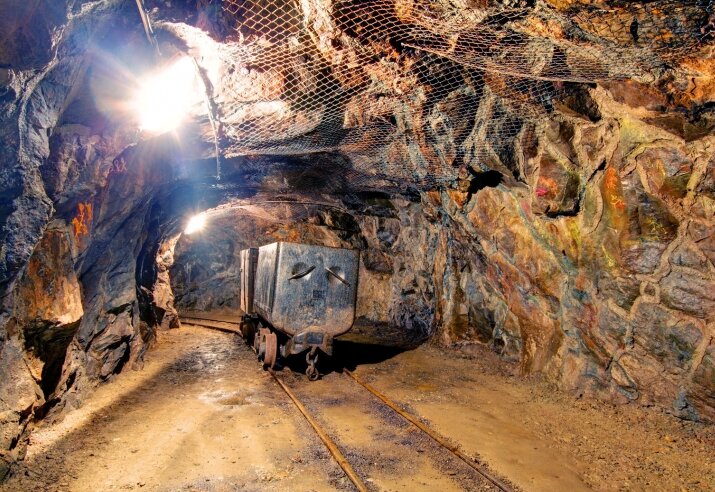
Buzwagi Gold Mine, also in the Kahama district of Shinyanga region, was once one of Tanzania’s largest gold producers during its mid-2010s peak, originally operated by Acacia Mining before Barrick Gold acquired full control of Acacia’s Tanzanian operations.
Though its output has declined from earlier highs, Buzwagi continues producing around 175,000 ounces annually, with Barrick focused on maximizing the mine’s remaining resources through improved extraction techniques as it nears the end of its operational life.
New Luika Gold Mine: Shanta Gold’s High-Grade Operation
Located in the Lupa Goldfields of the Mbeya region in southwestern Tanzania, New Luika Gold Mine is operated by Shanta Gold, a UK-based mining company.
In production since 2012, New Luika produces roughly 80,000 ounces annually from high-grade deposits with relatively low production costs, and continues to show strong exploration potential as Shanta identifies additional reserves in the surrounding area.
Nyanzaga Gold Project: Tanzania’s Next Major Mine
The Nyanzaga Gold Project, in Tanzania’s Mwanza region, represents the country’s next major gold development. Now under Perseus Mining following a $180 million acquisition and a further $523 million investment commitment, Nyanzaga is projected to produce approximately 213,000 ounces of gold annually once fully operational — a scale that would immediately place it among Tanzania’s top-tier producers alongside Geita and North Mara.
Kenya’s Emerging Giants: From Artisanal Roots to Major Discovery
Kenya’s gold sector has historically been dwarfed by Tanzania’s — Kenya produced just 565 kilograms in 2022 against Tanzania’s 62.5 tonnes the same year, a gap reflecting decades of underinvestment rather than a lack of underlying resources. That’s now changing fast.
Kilimapesa Gold Mine, in Narok County and operated by Imara Gold, is Kenya’s longest-running modern commercial gold mine, established in 2009 within the historically productive Migori Archaean Greenstone Belt. This shallow underground operation, combined with a heap-leach circuit for lower-grade material, holds a JORC-compliant resource of 705,000 ounces (14.05 million tonnes at 1.56 g/t), with ongoing expansion drilling at satellite targets.
Far more significant is the West Kenya Project, operated by Shanta Gold Kenya Limited — a subsidiary of London-listed Shanta Gold, acquired from Barrick Gold in 2020.
Within this project, the Isulu-Bushiangala deposit in Kakamega County holds an estimated 1.27 million ounces of gold at an exceptional average grade of 11.43 grams per tonne, valued at roughly KES 683 billion.
The broader West Kenya Project resource stands at 1.76 million ounces grading 5.55 g/t, with the potential to produce over 100,000 ounces annually at full production.
Backed by a $510 million investment commitment, this single project alone is projected to lift Kenya’s national gold output from under 1 tonne to somewhere between 5 and 10 tonnes once operational — a genuine step-change for the country’s gold sector, and one that positions Kenya as a serious new contender in East Africa’s production rankings rather than a marginal player.
Uganda: Real Potential, Still Largely Artisanal
Unlike Tanzania and Kenya’s named flagship mines, Uganda’s gold sector doesn’t yet have a single large-scale operation of comparable production scale — its sector remains dominated by artisanal and small-scale mining across regions including Busia, Karamoja, and Mubende, alongside reported large deposits totaling roughly 31 million metric tons of ore.
Uganda’s 2022 Mining and Minerals Act and its push toward domestic refining and beneficiation are actively working to formalize this sector and attract the kind of large-scale investment that has already transformed Tanzania and, increasingly, Kenya’s gold industry — worth watching over the next several years as that formalization matures.
How Kibali Gold Mine (DRC) Compares Regionally
Just west of East Africa proper, in the Democratic Republic of Congo’s Ituri Province, sits Kibali Gold Mine — Africa’s single largest gold mine by production, operated by Barrick Gold and AngloGold Ashanti through the SMRC joint venture. Kibali produced roughly 750,000 ounces in 2022, dwarfing every named mine in Tanzania or Kenya individually.
While technically outside East Africa’s core geography, Kibali’s scale and its shared Barrick ownership with North Mara and Bulyanhulu make it an important regional reference point when evaluating just how large East and Central Africa’s gold operations can genuinely get.
East Africa’s Largest Gold Mines at a Glance
| Mine | Country | Operator | Est. Annual Production |
|---|---|---|---|
| Geita Gold Mine | Tanzania | AngloGold Ashanti | ~600,000 oz |
| North Mara Gold Mine | Tanzania | Barrick / Twiga Minerals JV | ~270,000 oz |
| Bulyanhulu Gold Mine | Tanzania | Barrick / Twiga Minerals JV | Undisclosed (major underground producer) |
| Buzwagi Gold Mine | Tanzania | Barrick Gold | ~175,000 oz |
| Nyanzaga Gold Project | Tanzania | Perseus Mining | ~213,000 oz (projected) |
| New Luika Gold Mine | Tanzania | Shanta Gold | ~80,000 oz |
| West Kenya Project | Kenya | Shanta Gold Kenya Ltd | 100,000+ oz (projected, full production) |
| Kilimapesa Gold Mine | Kenya | Imara Gold | Resource: 705,000 oz |
Figures reflect the most recent publicly reported estimates and vary by source and reporting period; projects still in development are marked as projected output.
What This Means for Gold Buyers
Understanding where East Africa’s gold actually comes from matters for buyers wanting genuine traceability — a bar sourced with documentation tracing back to a named mine like Geita or North Mara carries a very different provenance story than gold moving through informal artisanal channels.
As Kenya’s West Kenya Project and Tanzania’s Nyanzaga come fully online over the next few years, expect the region’s overall supply — and the quality of documentation available to international buyers — to improve alongside it. Our guide on gold exporters in Kenya covers what to look for in properly documented, traceable East African gold today.
Looking to source certified gold from East Africa’s producing regions? Browse our gold bars for sale or contact our team to discuss current stock.
FAQ: Largest Gold Mines in East Africa
What is the largest gold mine in East Africa? Geita Gold Mine in Tanzania, operated by AngloGold Ashanti, producing roughly 600,000 ounces annually.
Which company operates the most gold mines in Tanzania? Barrick Gold, through its Twiga Minerals joint venture with the Tanzanian government, operates both North Mara and Bulyanhulu, two of the country’s largest mines.
Does Kenya have any major gold mines? Kenya’s gold sector is rapidly developing — Kilimapesa Gold Mine is currently operating, while the much larger West Kenya Project, including the 1.27 million ounce Isulu-Bushiangala deposit, is moving through development with production expected to significantly increase Kenya’s national output.
Why doesn’t Uganda have a named flagship gold mine like Tanzania or Kenya? Uganda’s gold sector remains dominated by artisanal and small-scale mining rather than a single large industrial operation, though formalization efforts under the 2022 Mining and Minerals Act are working to change that.
Is Kibali Gold Mine in East Africa? Kibali sits in the Democratic Republic of Congo’s Ituri Province, generally classified as Central Africa, though its scale and shared ownership with Tanzanian mines make it a relevant regional comparison point.