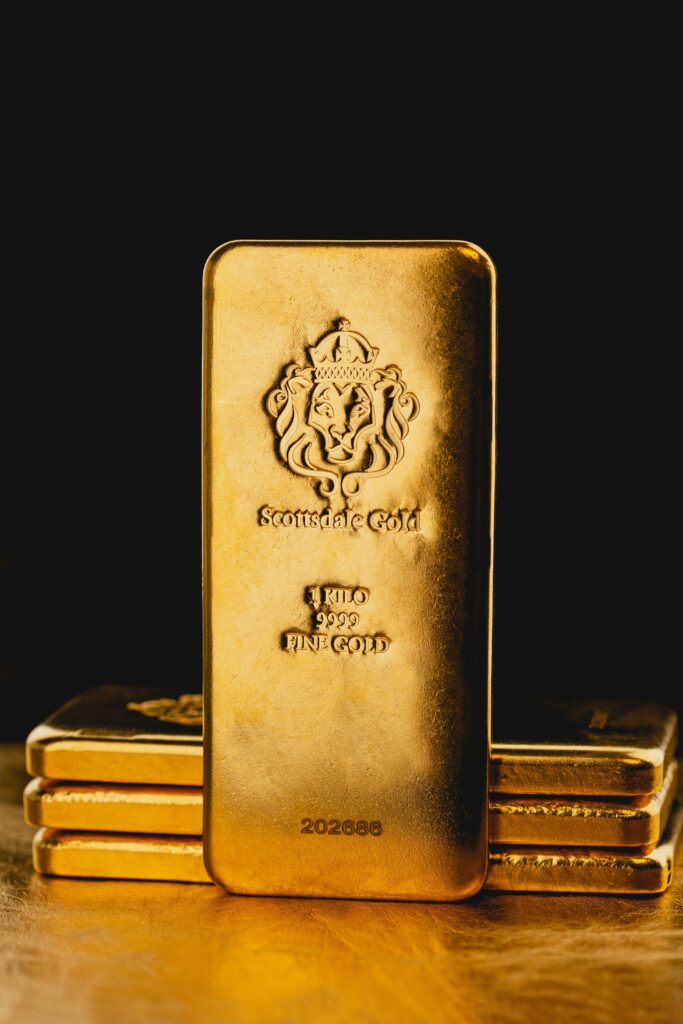
The Future of Gold Mining in East Africa
Explore the future of gold mining in East Africa, including emerging trends, investment opportunities, sustainability, and the region’s growing gold industry.
East Africa’s gold sector is in the middle of a genuine structural shift — not just higher prices, but a different relationship between the region and the gold beneath it. Central banks are buying directly from domestic miners instead of only trading on international markets.
Satellite-based exploration is cutting prospecting costs by up to 85%. Governments are rewriting mining law to keep more value inside their own borders rather than exporting it raw.
This guide covers what’s actually driving the future of gold mining in East Africa, country by country, and what it means for anyone buying gold from the region today.
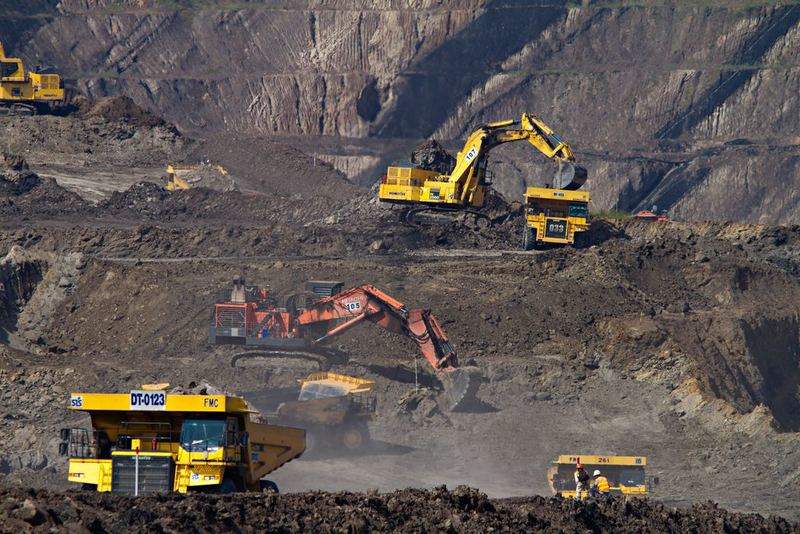
The Current State of East African Gold Production
Africa’s total gold output surpassed 700 tonnes in 2025, with Ghana, South Africa, Mali, Burkina Faso, Tanzania, and Uganda together accounting for the majority of that figure.
Within East Africa specifically, Tanzania leads production, anchored by the Lake Victoria Goldfields’ Archean greenstone belts, with Barrick Gold’s North Mara and Bulyanhulu mines alone producing more than 500,000 ounces annually.
Uganda, Kenya, and Ethiopia round out the region’s meaningful gold-producing nations, each at a different stage of development — Uganda’s sector is genuinely expanding, Kenya’s remains comparatively nascent, and Ethiopia’s gold reserves sit alongside its tantalum deposits as a secondary but growing contributor.
Trend 1: Central Banks Are Buying Gold Directly from Domestic Miners
This is arguably the most consequential shift happening in East African gold mining right now, and it gets far less attention than it deserves. Central banks in Tanzania, Uganda, Ghana, Rwanda, and Namibia have started purchasing gold directly from domestic small-scale miners, rather than sourcing exclusively through international bullion markets.
The strategy serves two purposes at once: it supports local mining economies with a guaranteed buyer, and it builds sovereign gold reserves without exposure to U.S. dollar-denominated assets — a genuine de-dollarization move, not simply a yield-seeking one.
The scale of this shift is real. Continental central bank reserves grew from $480 billion to $530 billion between 2024 and 2025, with gold’s share of those reserves rising from under 10% to approximately 17%, and physical gold holdings increasing from 663 to 738 tonnes between 2022 and 2025.
As East African governments continue this pattern, expect domestic gold markets to become an increasingly formal, government-integrated part of the regional economy — not a parallel informal sector operating alongside official channels.
Trend 2: Satellite and AI-Driven Exploration Are Transforming Discovery
Traditional gold exploration in East Africa has historically meant slow, expensive ground surveys. That’s changing fast. Satellite-based mineral detection platforms using multispectral and hyperspectral data can now identify mineralized zones and geological structures from orbit, while AI-generated 3D prospectivity mapping guides exploration teams directly to the most promising sites — reducing exploration costs by an estimated 80–85% compared to conventional methods.
Tanzania is leading this shift regionally, with high-resolution airborne geophysical survey coverage expanding from just 16% to a targeted 50% of the country by 2030, systematically de-risking greenfield exploration targets for incoming investors. Expect this technology adoption to accelerate discovery rates across Uganda, Kenya, and Ethiopia as the tools mature and exploration budgets follow the early success seen in Tanzania.
Trend 3: Formalizing Artisanal and Small-Scale Mining
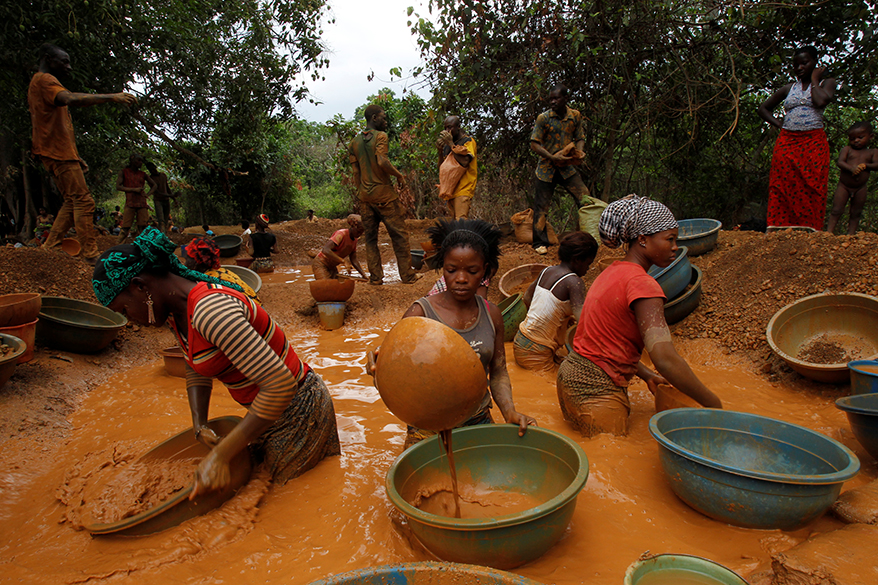
Artisanal and small-scale mining (ASM) remains a genuinely crucial contributor to East African gold output, supporting grassroots economies even as it presents real regulatory, environmental, and social challenges.
The regional trend is unmistakably toward formalization — Tanzania’s 2017 Mining Act revisions introduced mandatory government equity stakes in mining projects, increased royalties, and banned unprocessed mineral exports outright, while Uganda’s Mining and Minerals Act of 2022 emphasizes environmental safeguards, community rights, and local content requirements, mandating environmental impact assessments and rehabilitation plans.
For buyers, this formalization trend matters directly: it’s precisely what’s driving the improved documentation, traceability, and assay certification standards that distinguish a properly sourced East African gold bar from an informally traded one. Our guide on gold exporters in Kenya covers exactly what this formalized documentation should look like in practice.
Trend 4: Local Beneficiation and Growing Refining Capacity
East African governments are increasingly unwilling to simply export raw or semi-refined gold and let other regions capture the refining margin. Tanzania now hosts roughly 450 tonnes per year of gold refining capacity — nearly half of Africa’s total — with an active push toward full LBMA accreditation that would let Tanzanian-refined gold trade internationally without further certification.
Uganda is pursuing a similar beneficiation strategy, aiming to shift from a raw mineral exporter toward a producer of higher-value processed products, supporting domestic job creation and capturing more export revenue within its own borders rather than sending it abroad for refining.
This shift toward regional refining capacity is a genuinely positive development for buyers specifically: more East African gold reaching LBMA Good Delivery standard, refined within the region rather than after export, means shorter supply chains and more direct sourcing relationships.
Trend 5: ESG Standards and Renewable Energy Integration
International capital increasingly requires strong environmental, social, and governance performance before committing to African mining projects, and the region is responding.
Renewable energy integration is gaining real traction — solar deployment at mining operations in the wider region and hydropower expansion in the DRC are both reducing operational energy costs while improving ESG credentials that matter enormously to institutional investors and international buyers alike.
Over 60% of Tanzanian gold mines reportedly plan sustainable water management investment in the near term, reflecting a genuine shift in how mining companies operating in East Africa think about long-term license to operate, not just extraction volume.
Country-by-Country Outlook
Tanzania: The Regional Leader
Tanzania’s gold production is projected to rise by roughly 12% by 2026, with gold accounting for up to 55% of the country’s total mineral exports.
Major international players continue expanding — Perseus Mining’s $180 million acquisition of the Nyanzaga Gold project, alongside a further $523 million investment commitment, signals genuine confidence in Tanzania’s medium-term trajectory, even following the political uncertainty around the October 2025 elections.
Tanzania’s combination of production scale, refining capacity, and exploration technology adoption makes it the clear regional bellwether.
Uganda: Rising Fast on Formalization and Beneficiation
Uganda’s gold sector is expanding alongside its emerging rare earth element potential, with the Mining and Minerals Act of 2022 setting a genuinely more structured regulatory foundation than the country has historically had.
Uganda’s push toward local beneficiation — processing gold domestically rather than exporting it raw — positions the country to capture considerably more value from its own production over the coming years.
Democratic Republic of Congo: Enormous Potential, Enormous Uncertainty
The DRC’s mineral base is estimated at $24 trillion, with roughly 90% of its mineral potential still unexplored — a genuinely staggering figure that includes significant gold reserves alongside the country’s dominant cobalt position.
Realizing this potential depends heavily on infrastructure, security, and governance improvements that remain a work in progress; the DRC’s government has explicitly stated it’s seeking long-term partners willing to invest in exploration, infrastructure, and workforce development, not simply extraction.
Kenya: A Measured, Diversifying Resurgence
Kenya’s mining sector is experiencing what analysts describe as a measured resurgence, driven partly by demand for energy-transition minerals like niobium, titanium, and rare earth elements alongside its gold sector.
Kenya’s regional investment hub status — strong banking infrastructure, established logistics through Mombasa’s port, and a deep pool of licensed dealers — continues to support cross-border trade even as domestic gold production itself remains comparatively modest next to Tanzania and Uganda.
This is precisely why Kenya functions so effectively as a regional gold trading and export hub, even without matching its neighbors on raw production volume — our guides on where to buy gold in Kenya and buying gold in Kenya cover this trading infrastructure in depth.
Ethiopia: The Quiet Fourth Player
Ethiopia’s gold and tantalum reserves round out East Africa’s four principal gold-producing nations. While it receives less international attention than Tanzania or the DRC, Ethiopia’s mineral sector — including active potash exploration in the geologically dynamic Danakil Depression — suggests genuine room for growth as exploration technology and investment reach the country more fully.
Where Gold Prices Are Headed
Major institutional forecasts point toward continued strength through 2026 and beyond. J.P. Morgan projects gold reaching $6,300 per ounce by year-end 2026, with a normalized long-term price around $4,500/oz, while Morgan Stanley targets $5,700 per ounce by the same point — both institutions citing sustained safe-haven demand, dollar weakness, and structural central bank reserve diversification as the core drivers.
For East African producing nations actively building sovereign gold reserves, this price environment reinforces exactly the de-dollarization strategy already underway. Our live gold price in Kenya tracker reflects how these global forecasts translate into daily local pricing.
What This Means for Gold Buyers Today
The direction of travel across East Africa’s gold sector — formalization, improved documentation, growing refining capacity, and technology-driven exploration — is genuinely good news for international buyers specifically.
It means the gap between “informally traded gold” and “properly certified, traceable gold” is narrowing as regional infrastructure matures, and buyers working with licensed, compliant dealers today are positioned well ahead of where the region’s regulatory environment is heading.
Our guide on top gold bullion dealers in Kenya covers exactly what to look for in a dealer built for this more formalized future rather than the informal market it’s replacing.
Interested in sourcing certified East African gold today? Browse our gold bars for sale or contact our team to discuss current stock and pricing.

FAQ: The Future of Gold Mining in East Africa
Which East African country produces the most gold? Tanzania, anchored by the Lake Victoria Goldfields and major operations including Barrick Gold’s North Mara and Bulyanhulu mines.
Why are East African central banks buying gold directly from miners? To support domestic mining economies and build sovereign gold reserves with reduced exposure to the U.S. dollar — a deliberate de-dollarization strategy alongside the financial return.
How is technology changing gold exploration in East Africa? Satellite-based mineral detection and AI-driven prospectivity mapping are cutting exploration costs by an estimated 80–85% compared to traditional ground survey methods.
What is beneficiation, and why does it matter for East African gold? Beneficiation means processing raw gold domestically rather than exporting it unrefined — Tanzania and Uganda are both actively pursuing this to capture more value and jobs within their own economies.
Is East African gold becoming more traceable and certified over time? Yes — formalization efforts, stricter mining legislation, and growing LBMA-standard refining capacity are all pushing the region toward more documented, traceable gold supply chains.