Gold Refineries in Mali | Senou Refinery Status & Guide 2026
Mali is one of Africa’s largest gold producers. For decades, however, most of its gold has left the country in an unrefined form. Doré bars produced at mining sites have traditionally been transported abroad for refining, allowing other countries to capture much of the value-added processing and the associated economic benefits.
That is beginning to change. In June 2025, Mali’s military-led government broke ground on a large state-controlled gold refinery on the outskirts of Bamako in partnership with a Russian industrial group. If the project proceeds as planned, it will become the country’s first refinery designed to meet international certification standards and could significantly reshape gold refining and trade across the Sahel region.
If you’re searching for information about gold refineries in Mali, you’re probably looking for answers to questions such as:
- Which gold refineries currently operate in Mali?
- Who owns the new Senou refinery, and when will it begin operations?
- Will the refinery receive LBMA accreditation, and why is that important?
- Can foreign buyers legally purchase Malian gold, and what risks should they consider?
- Where is Malian gold refined today?
This guide answers each of these questions, explains the technical terms in straightforward language, and concludes with a practical due diligence checklist for buyers. As a Ugandan gold supplier, we have a commercial interest in this market, but we have made every effort to present the information in a balanced, factual, and transparent manner.
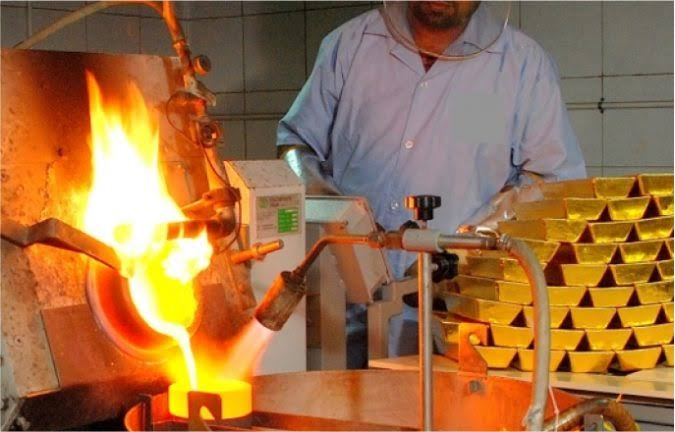
Mali’s Gold Sector at a Glance
Mali ranks among Africa’s leading gold-producing nations. Reports published in 2025 variously ranked the country as the second-, third-, or fourth-largest gold producer on the continent, depending on the reporting period and data source. While rankings may change over time, one fact remains consistent: gold is central to Mali’s economy and an important source of government revenue.
Gold production comes from two distinct sectors:
- Industrial mining, carried out by international and joint-venture mining companies operating large open-pit and underground mines, primarily in western and southern Mali.
- Artisanal and small-scale mining (ASM), conducted by individuals and local communities using manual or semi-mechanized methods across several regions of the country. This sector employs many people but is significantly more difficult to regulate and monitor.
Official estimates placed Mali’s annual gold production at approximately 50 tonnes when the Senou refinery project was announced. One regional analysis estimated that industrial production declined by about 25% in 2025 to around 42 tonnes during the government’s dispute with Barrick Mining over the Loulo-Gounkoto mining complex. The same analysis suggested that production began recovering during the first half of 2026 after the dispute eased. Because these figures come from secondary sources, they should be regarded as approximate rather than definitive.
Which Gold Refineries Exist in Mali Today?
This is one of the most frequently searched questions, and the answer is relatively straightforward.
According to Mali’s Ministry of Mines, as reported by international news agencies in 2025, Mali currently has two existing gold refineries. However, neither refinery holds internationally recognized certification—such as LBMA Good Delivery accreditation—required to supply the global wholesale bullion market. As a result, industrial mining companies have historically exported their doré bars to foreign refineries for final processing.
We have intentionally chosen not to publish the names, addresses, or capacities of those two facilities because the publicly available reports we reviewed do not identify them in a way that we can independently verify. Publishing unconfirmed information about refining businesses would be unfair to those companies and potentially misleading for readers.
If you require additional information, contact Mali’s Ministry of Mines directly or request supporting documentation from the Malian company with which you intend to do business.
Based on publicly available reporting, the following points can be stated with reasonable confidence:
- Existing refineries in Mali are generally understood to be small-scale facilities serving the domestic market.
- They are not included on the LBMA Good Delivery List, meaning their bars are not accepted as standard wholesale bullion by the international market.
- Industrial mining companies have traditionally exported doré bars for refining, with the United Arab Emirates, South Africa, and Switzerland among the destinations most frequently mentioned in published reports.
The Senou refinery: Mali’s flagship project
The project at the center of the story is a new state-controlled refinery at Senou, on the southern outskirts of Bamako, close to the international airport.
Key facts
- Groundbreaking: June 16, 2025, with a ceremony led by Mali’s transitional president, Colonel Assimi Goïta.
- Operating company: SOROMA-SA, created to own and run the plant.
- Ownership: the Malian state holds 62%, and Russia’s Yadran Group holds 38%. A decree approving the shareholding was passed in late May 2025. Some reports also mention an unnamed Swiss investment company involved in the project, but the public ownership structure describes only the state and Yadran, so treat the Swiss role as unclear.
- Site: roughly five hectares near Bamako airport.
- Design capacity: up to 200 tonnes of gold per year, which is about four times Mali’s recent output. Yadran has said the plant would start at around 100 tonnes a year in a first phase, with expansion to 200 tonnes possible later.
- Facilities: the plan includes smelting and refining equipment, an assay laboratory and secure vaulting and storage.
- Target purity: reports say the plant aims to produce gold at 99.5% purity, a level that matches the standard needed for good delivery bars.
- Share capital: one regional report put the company’s initial capital at 600 million CFA francs, roughly one million US dollars, which is small relative to the scale of the project, and financing details have not been fully explained publicly.
Other figures in circulation, such as a total project cost of around 200 million US dollars, come from secondary reports and have not been confirmed in the sources we reviewed.
The timeline
This is where you should be most careful, because dates have been moving.
- At the groundbreaking, officials suggested construction would take roughly 12 to 18 months.
- Yadran told a news agency that construction was scheduled for 18 months, after which the plant would begin operating and ramp up gradually.
- Another report in 2025 said installation and certification phases would run through 2026, with operations targeted for mid-2027.
- A regional analysis published in late 2026 said completion was scheduled for December 2026, but that a delay into 2027 looks likely, partly because of Mali’s security situation.
So as of November 2026, the refinery should be treated as under construction and not yet in commercial operation, with a realistic start sometime in 2027. If you are reading this later, check the latest news before relying on that.
What officials say it will do
Government and company statements describe several goals:
- Refine all Malian gold at home and end decades of exporting it in crude form.
- Improve traceability, which matters because smuggling and under-reporting have long cost the country revenue.
- Become a regional hub that could also process gold from neighboring countries such as Burkina Faso, and possibly other Sahel states.
- Create jobs, with reports mentioning over a thousand construction jobs and a smaller number of permanent roles once running.
As one of the project’s backers put it, the aim is to graduate from being a low-value exporter of raw minerals to a high-value gold producer. Whether the plant delivers on that depends on several hard problems covered below.
Why LBMA certification matters so much
To understand why Mali’s refining story is so important, you need to know what the London Bullion Market Association does and what Good Delivery means.
What is the LBMA?
The London Bullion Market Association is the trade body that sets standards for the global wholesale gold and silver market. Its Good Delivery List names the refiners whose bars are accepted by banks, bullion dealers and central banks without further testing.
What does Good Delivery require?
To be listed, a refinery generally needs to show:
- Technical quality. It must produce bars that meet strict standards for purity, weight, marking and appearance, and pass repeated testing.
- Financial strength and governance. It must be a serious, well-capitalized business with sound controls.
- Responsible sourcing. It must follow the LBMA Responsible Gold Guidance, which is aligned with OECD due diligence rules and requires the refinery to know where its gold comes from and to avoid sources linked to conflict, human-rights abuses, or money laundering. Independent audits are part of this.
Getting listed takes years, not months, and the process depends on outside assessors. Yadran has said the Mali plant is being designed to meet the standards needed to apply for Good Delivery status, but it has also said it cannot predict when approval would come, since that rests on independent certification bodies.
Why it changes the economics
Without accreditation, a refinery is effectively locked out of the international wholesale market. Its output would have to be re-refined elsewhere or sold at a discount to buyers willing to accept the extra risk. With accreditation, its bars can be sold directly to banks and dealers at full value. That is the difference between a refinery that serves only a local market and one that captures real export value.
The catch: sourcing rules
Here is the challenge for Mali, and for every new refinery in the region. LBMA accreditation requires a refinery to demonstrate that its gold is responsibly sourced. Mali has a large artisanal sector, an active security crisis in parts of the country, and a long history of smuggling. A refinery that wants to be accepted by international buyers has to prove it is not taking in gold of unclear origin. Doing that at scale in the Sahel is difficult.
There is also a separate question about sanctions and political risk. The refinery has a Russian industrial partner, and international banks and bullion buyers apply their own compliance rules to counterparties from certain countries. We are not making any claim about how those rules apply to specific parties. We are pointing out that any serious buyer or bank would examine them closely.
Where Malian gold is refined today
Since Mali’s own facilities are not certified, most of its gold has been refined overseas. Reporting names three main destinations.
The United Arab Emirates
Dubai in particular is a major hub for African gold, with refiners and traders handling large volumes from the continent. Buyers and regulators have increased scrutiny of this trade, so documentation and traceability requirements have become stricter.
South Africa
South Africa has long-established refining capacity, including facilities linked to its own mining industry, and it has historically processed gold from across the continent.
Switzerland
Switzerland is home to several of the world’s largest refiners, and a significant share of the world’s refined gold passes through Swiss facilities. Swiss refiners operate under strict sourcing and audit requirements.
For an industrial miner, sending doré abroad has costs: transport, insurance, refining fees, and the time money is tied up. The Malian government’s argument is that doing the refining at home would keep more of that value inside the country. The counter-argument, made by some analysts, is that building capacity four times larger than national output risks creating a plant that does not have enough gold to run efficiently, particularly if other countries in the region build competing refineries.
The regional race for refineries
Mali is not alone. Across West Africa, several governments have decided that gold should be refined where it is mined.
- Ghana, a leading African producer, has had refining capacity and has been strengthening its state role in the gold trade.
- Guinea has moved to require domestic refining and has been developing refining capacity of its own, with ambitions to become a regional hub.
- Burkina Faso has been building its own refining plans, aimed at the same pool of small-scale gold.
- Niger has also taken steps toward more local processing.
Analysts have raised a fair question: if each country builds a large refinery and each hopes to attract gold from its neighbors, will there be enough gold to go round? The risk is that plants compete for the same artisanal supply, which is already hard to capture through formal channels. Whether Mali’s refinery becomes a true regional hub or simply a national facility will depend on price competitiveness, security and trust, since miners and traders choose the buyer that pays the best and is safest to deal with.
Barrick, the mining code and why they matter for refining
The refinery cannot be understood apart from Mali’s broader dispute with international mining companies.
In 2025, Mali’s government and the Canadian company Barrick Mining clashed over taxes and the new mining code. The state blocked gold exports from the Loulo-Gounkoto complex, took temporary control of the operation and removed gold from the site, and Barrick halted operations. After months of confrontation and an international arbitration filing, the two sides announced an agreement in late 2025 to resolve the dispute and reopen the mine under Barrick, and one report says Mali renewed the Loulo permit for ten years in early 2026.
Why does this matter for refining? Because the requirement to refine at home applies to industrial producers too, and the dispute showed how far the government is willing to go to enforce its terms. For a miner, the refinery is both an opportunity and a risk. If it works, it offers local processing and possibly lower logistics costs. If it is delayed or unreliable, miners may face pressure to use it anyway, or to find a legal route to export.
What the refinery means for different kinds of buyers
Large institutional and bullion buyers
For banks and wholesale dealers, the practical position is simple: until a Malian refinery is on the LBMA Good Delivery list, its bars are not standard wholesale product. Buyers will continue to prefer gold refined by listed refiners elsewhere, and they will want full documentation of Malian origin.
Mid-sized dealers and traders
The opportunity is that a functioning domestic refinery could make legal, documented purchases easier, because gold would be assayed and recorded at a single point. The risk is operational: delays, bureaucracy and security can interrupt supply, and rules can change quickly.
Small buyers and investors
Most small investors will never buy directly from Mali, and should not try. Bars from established mints and refiners are easier to authenticate and resell.
Buyers looking at other African sources
Buyers comparing African gold supply should compare jurisdictions side by side, looking at licensing, export rules, traceability, security and the track record of the refining partner. For example, our own supply comes from Uganda, with a refining and assay partner of [name, only if a written agreement is in place]. We recommend that you verify any supplier, including us.
Risks to understand before dealing in Malian gold
This section is not meant to discourage legitimate trade. It reflects what compliance professionals will look at.
- Security risk. Parts of Mali face armed conflict and instability, which affects mining operations, transport routes, and insurance.
- Policy risk. The mining code, export rules and state-ownership requirements have changed recently and could change again. The Barrick episode shows contracts can be contested.
- Traceability risk. A large artisanal sector and a history of smuggling mean origin documentation is crucial and sometimes weak.
- Counterparty risk. New state-owned and joint-venture entities do not yet have long track records, and ownership and sanctions exposure should be reviewed.
- Certification risk. Until a Malian refinery gains international recognition, its bars may not be accepted by major buyers, and any quoted purity should be independently verified.
- Fraud risk. Mali, like many gold-producing countries, is a favorite location for scammers posing as miners or refiners. Be wary of anyone offering “direct from the refinery” gold at a discount.
A practical due diligence checklist
If you are considering any purchase connected to Mali, use this list.
- Verify the seller’s licenses with the Ministry of Mines or the relevant regulator, using contact details you found yourself.
- Ask who refined the gold and request the refinery’s accreditation documents, including whether it is on the LBMA Good Delivery list.
- Request origin records showing which mine or licensed source each lot came from.
- Check export documentation for each shipment, including permits and customs paperwork.
- Review sanctions and compliance exposure for every party in the chain, with a qualified adviser.
- Insist on independent assay, ideally by fire assay at a laboratory you choose.
- Pay only through secure structures, such as escrow or letters of credit, to a corporate account matching the contract.
- Never pay “release” or “clearance” fees after payment. That is a classic scam pattern.
- Start small, and expand only after a clean first transaction.
How to follow developments
Because this story is moving, here is how to keep up:
- Watch for announcements from Mali’s Ministry of Mines and Ministry of Economy and Finance.
- Follow statements from Yadran Group and SOROMA-SA about construction milestones.
- Check the LBMA’s published Good Delivery List for any Malian refinery, which is the clearest sign of international acceptance.
- Follow reputable mining and commodity news outlets that report on the Sahel.
A refinery that is ready to apply for Good Delivery status will be visible long before it is accepted, since the process involves audits and public steps. Treat any claim of “LBMA approved” as unverified until you see the name on the official list.
Frequently asked questions
Does Mali have a gold refinery?
Mali has two small existing refineries that, according to the Ministry of Mines, lack international certification. A much larger state-controlled refinery is under construction at Senou near Bamako.
When will the Senou refinery open?
Official plans pointed to completion in about 18 months from the June 2025 groundbreaking, which implies late 2026. Recent analysis suggests delays into 2027 are likely. Check current news for the latest timeline.
Who owns the Senou refinery?
The operating company, SOROMA-SA, is 62% owned by the Malian government and 38% by Russia’s Yadran Group.
How much gold will it refine?
The design capacity is up to 200 tons a year, with a first phase of around 100 tons reported. Mali’s recent annual output has been roughly 40 to 50 tons, so the plant is designed to be much larger than local supply and is meant to draw gold from neighboring countries too.
Is the Mali refinery LBMA accredited?
Not yet, as far as public reporting shows. The developers say it is designed to meet Good Delivery standards and intend to seek that status, but they have not given a date, and approval depends on independent certification.
Where is Malian gold refined now?
Most has been exported as doré and refined in places such as the United Arab Emirates, South Africa and Switzerland.
Can foreigners buy gold directly from Mali?
Legally, only through licensed channels with proper export documentation, and with careful attention to compliance, security and sanctions rules. Anyone who offers cheap gold without paperwork should be treated with suspicion.
Is gold from Mali conflict-free?
There is no blanket answer. Responsible sourcing depends on the specific mine, the supply chain and the documentation. That is exactly why traceability and independent audits matter.
Why is Mali refining its own gold?
The government wants to keep more of the value at home, reduce smuggling and exert more control over its resources. The revised mining code requires domestic processing.
Final note
Mali’s gold refinery story is really three stories at once. It is an industrial story about whether a landlocked Sahel country can build a world-class refining plant. It is a political story about resource sovereignty, relations with Russia, and tension with Western mining companies. And it is a market story about whether a new refinery can earn the trust of banks and bullion dealers who decide where gold actually trades.
For now, the plant at Senou is a promise rather than a producer. Its success will depend on finishing construction, securing a steady supply of gold, passing independent audits and winning international certification. Buyers and observers should watch each of those milestones rather than relying on announcements.
If you are exploring gold supply from East Africa as an alternative or complement to West African sources, we are happy to share our licenses, assay arrangements and sourcing records so you can verify us before you commit.
Ready to talk?
Sources and further reading
The facts in this guide were compiled from published reporting, including coverage by Reuters (as carried by Mining Weekly, Mining Mx and Mining.com), the BBC (as carried by The Namibian), Interfax, Africa Mining and Engineering Review, Global Construction Review, Business Day, the Geopolitical Monitor and the Ghana Business Communication (GBC) summary of the groundbreaking. Please read the originals and check for updates before you rely on any figure.
note: This article is general information, not legal, tax, compliance, or financial advice. Sanctions rules, mining regulations, and refinery certification status change, so confirm current facts with the relevant authorities and qualified advisers before entering any transaction.