What is a Gold Assay Certificate? |How to Check Purity & Authenticity
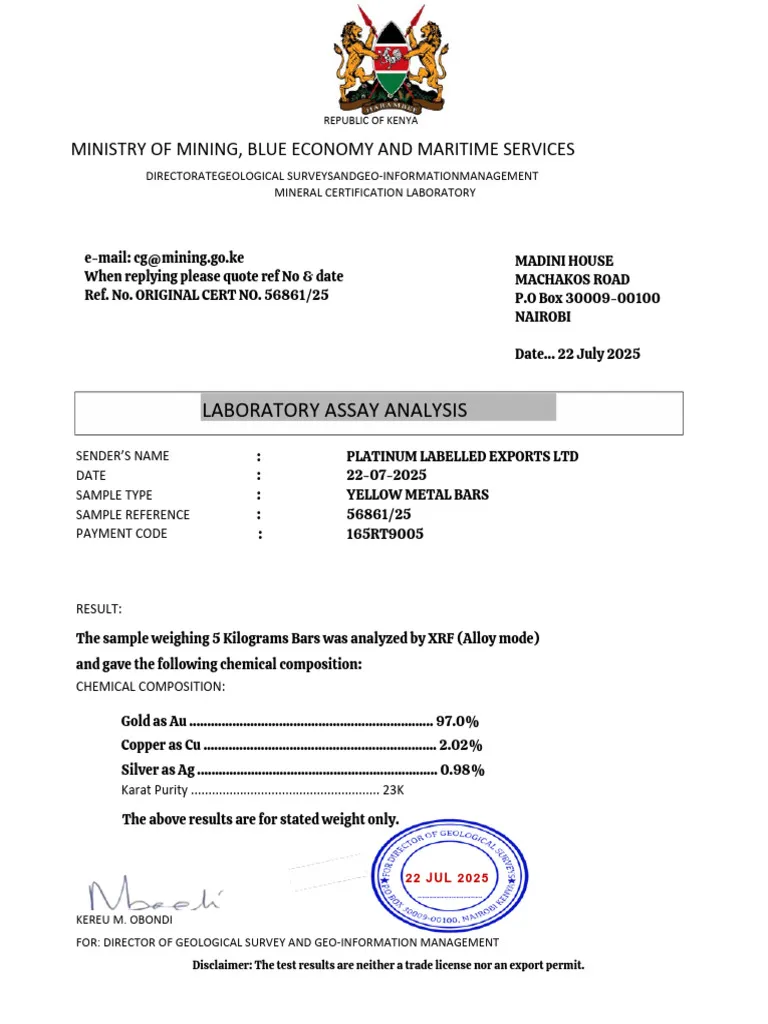
Gold is assayed by measuring exactly how much pure gold a sample contains, and the result is written as fineness in parts per thousand (for example, 999.9 means 99.99% pure gold). The international reference method is fire assay, also called cupellation: a small, precisely weighed sample is alloyed with silver, wrapped in lead, melted in a furnace, and the lead and base metals are absorbed into a porous cupel. The silver is then dissolved in nitric acid, and the remaining pure gold is weighed. Faster methods such as XRF (X-ray fluorescence) are often used first for screening, but they measure mainly the surface and are not the final word on high-value bullion.
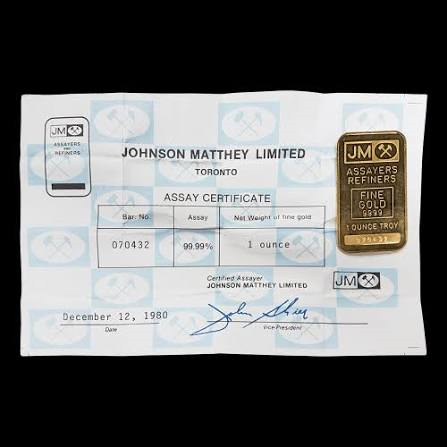
Once the measurement is done, an accredited laboratory, refiner, or assay office issues an assay certificate (also called an assay report). To read one correctly, check six things in order: (1) who issued it and whether they are accredited, (2) whether the bar or sample serial number matches your item, (3) the fineness figure and its unit, (4) the test method used, (5) the weight and any stated measurement uncertainty, and (6) the date. Then verify the certificate directly with the issuer, because a piece of paper alone proves nothing.
Key Takeaways
- Fineness is the number that matters. 999.9 fine means 999.9 parts of gold in 1,000. A 750 fine alloy is 18 karat.
- Fire assay (cupellation) is the benchmark for gold bullion and is the method defined in ISO 11426 and ASTM E1335.
- XRF is quick and non-destructive, but it reads only the outer layer of an item and can be fooled by plating.
- A certificate is only as trustworthy as its issuer. Look for ISO/IEC 17025 accreditation or membership of recognized refiner programs such as the LBMA Good Delivery List.
- Always match the serial number, then verify with the issuer. Forged certificates and genuine certificates attached to fake bars are both real risks.
- Assay, hallmark, certificate of authenticity, and appraisal are four different things. Only the assay measures purity.
What Is a Gold Assay?
An assay is a quantitative chemical analysis. In plain terms, it answers one question: how much of this metal is actually gold? For anyone buying, selling, refining, importing, or insuring gold, that single answer determines the price. Gold is traded on the basis of its pure gold content, so a bar that is 995.0 fine and a bar that is 999.9 fine of the same gross weight are not worth the same amount.
Assaying is old. The principle behind cupellation, using lead to carry away base metals while gold and silver stay behind, has been used for thousands of years. What has changed is precision. A modern accredited assay laboratory can determine the fineness of a gold bar to within a few hundredths of a percent, and it documents that result in a controlled, traceable way.
Why Assaying Matters
There are four main reasons gold is assayed:
- Pricing. The value of a bar, coin, scrap lot, or jewelry item is calculated from its fine gold content, not its gross weight.
- Fraud prevention. Gold-plated tungsten and other base-metal fakes are made to match the weight and size of real bars. Only a proper assay, or at minimum a careful multi-test inspection, will reveal them.
- Compliance. Refiners, banks, exporters, and customs authorities often require documented purity for shipments, financing, and tax purposes.
- Consumer protection. Jewelry sold as 18 karat should actually be 18 karat. Hallmarking systems in many countries exist for this reason.
Assay Versus Certification: What Is the Difference?
People often use the two words as if they were the same. They are not. Assaying is the act of measuring purity. Certification is the act of formally documenting and attesting to that measurement. A refiner may assay a bar and certify it by stamping the bar and issuing a certificate. An independent laboratory may assay a sample you submit and issue a report covering only that sample. The distinction affects how much weight you can place on the paper you are holding.
Understanding Gold Fineness, Karats, and Purity
Before you can read a certificate, you need to understand the units. Gold purity is shown in two main ways: fineness and karats.
Fineness is the number of parts of pure gold per 1,000 parts of the total alloy. It is written as a three- or four-digit number, such as 585, 750, 916, 995, 999, or 999.9. Divide by ten to convert to a percentage: 750 fineness is 75.0% gold.
Karat (K or kt) is a 24-part scale used mostly for jewelry. Pure gold is 24 karat. To convert, divide the karat number by 24: 18K is 18/24, or 75.0% gold.
| Karat | Fineness (parts per thousand) | Gold content | Typical use |
| 24K | 999 to 999.9 | 99.9% to 99.99% | Investment bars and coins |
| 22K | 916 (916.7 exactly) | 91.6% | Jewelry in many markets, some coins |
| 18K | 750 | 75.0% | Fine jewelry |
| 14K | 585 (583 in some markets) | 58.5% | Jewelry, widely used in the US |
| 10K | 417 (416 in some markets) | 41.7% | Lower-cost jewelry |
A small but important point: no gold is exactly 100% pure. Even refined gold carries trace impurities. This is why top-grade bars are marked 999.9, often described as four nines fine, rather than 1000.
Common Bullion Purity Standards
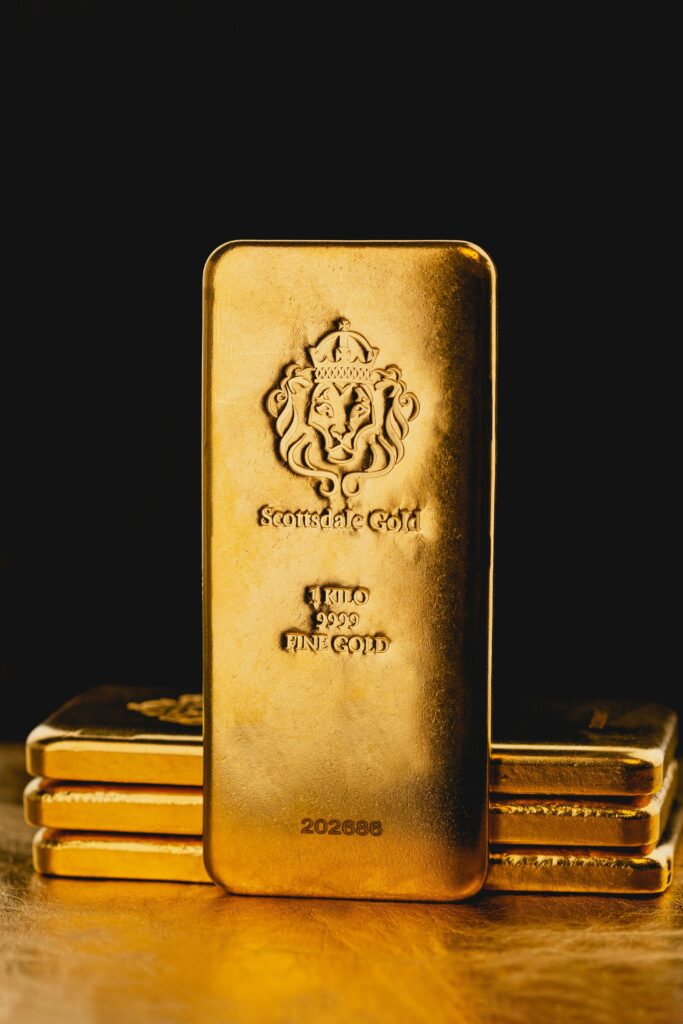
The London Bullion Market Association (LBMA) sets the best-known standard for large bars. Its Good Delivery rules specify that a gold bar must have a minimum fineness of 995.0 parts per thousand, a gold bar weight within a defined range (roughly 350 to 430 troy ounces for the standard bar), and a set of required markings. Many refiners produce bars well above the minimum, commonly 999.5 or 999.9. Small investment bars, such as 1 gram to 1 kilogram, are usually 999.0 to 999.9 fine.
How Gold Is Assayed: Fire Assay (Cupellation) Step by Step
Fire assay is the method accredited laboratories and refiners rely on for determining the fineness of gold bullion. It is destructive, because a small sample is consumed, but it is extremely accurate. ISO 11426 and ASTM E1335 describe the procedure. What follows is a plain-language walkthrough of the stages. This is an overview for understanding, not an operating procedure: real assaying uses furnaces above 1,000°C, molten lead, and concentrated acids, and belongs in a trained, equipped laboratory.
Step 1: Sampling
The assayer first takes a sample that represents the whole piece. For a solid bar, this is commonly done by drilling or cutting from the bar, with samples taken from more than one position when required by the method, because the metal can be slightly less uniform near the surface. For molten refiner production, a sample is often taken from the melt before the bar is cast, so that the sample reflects the whole pour. Representative sampling is where many assay errors begin, which is why reputable labs document how and where the sample was taken.
Step 2: Weighing
The sample, typically a few hundred milligrams, is weighed on a high-precision microbalance in a controlled environment. A balance that reads to a few micrograms, or better, is common. Because the final fineness calculation is a ratio of two weights, any weighing error flows straight into the result. Accredited labs calibrate balances against traceable reference weights and control temperature, air movement, and vibration.
Step 3: Adding Silver (Inquartation)
Pure silver is added in a carefully calculated proportion, generally about two and a half to three times the weight of the gold in the sample. This step is called inquartation. The reason is practical: when the final gold is later treated with acid, a gold-to-silver ratio in this range allows the silver to dissolve fully and leaves a clean, intact piece of gold rather than a crumbling residue or a piece that still holds silver.
The assayer also prepares check samples. These are reference pieces of known gold content that go through the entire process alongside the unknown. They correct for tiny, systematic losses of gold that happen during cupellation.
Step 4: Wrapping in Lead and Cupellation
The gold-silver sample is wrapped in thin lead foil and placed in a cupel, a small porous cup traditionally made from bone ash or magnesia. The cupel goes into a furnace heated to roughly 1,000°C or more. The lead melts and oxidizes, dissolving base metals such as copper. The molten lead oxide is absorbed into the cupel, while the gold and silver remain behind as a small shiny bead. A visible flash, called the brightening, tells the assayer the process is complete.
Step 5: Parting
The bead is flattened and rolled, then treated with hot nitric acid. Nitric acid dissolves the silver but leaves the gold. This stage is called parting. What remains is a thin, sponge-like or coiled piece of pure gold called a cornet.
Step 6: Annealing, Weighing, and Calculating
The cornet is washed, dried, and annealed (heated) so that it becomes a solid, dense piece that can be weighed accurately. It is then weighed on the microbalance. The assayer compares the cornet’s weight with the original sample weight, applies the correction from the check samples, and calculates the fineness.
For example, if a 250.0 mg sample yields a corrected cornet weight of 249.75 mg, the fineness is 249.75 / 250.0 × 1,000 = 999.0.
In practice, assayers run samples in duplicate, and results must agree within a tight tolerance. If they do not, the assay is repeated. This repeatability check is one of the strongest quality signals on a legitimate certificate.
Other Gold Testing Methods and Where They Fit
Fire assay is not the only technique. Each method has a role, and understanding the limits of each helps you interpret what a certificate claims.
| Method | Destructive? | Typical use | Strength | Limitation |
| Fire assay (cupellation) | Yes (small sample) | Bullion, refinery output, final fineness | Highest accuracy, reference method | Slower, needs a lab and trained assayers |
| XRF (X-ray fluorescence) | No | Screening, jewellery, scrap, quick checks | Fast, non-destructive | Reads the surface only; can be misled by plating |
| ICP-OES / ICP-MS | Yes (sample dissolved) | Jewellery alloys, trace impurity analysis | Detects many elements at once | Needs sample prep and calibration |
| Touchstone and acid test | Slightly | Quick field estimate | Cheap and portable | Subjective, only approximate |
| Density (specific gravity) | No | Bar and coin screening | Simple, no damage | Cannot prove purity; tungsten is close to gold in density |
| Ultrasonic and conductivity testing | No | Screening bars for hidden cores | Can detect internal inconsistencies | Not a purity measurement |
XRF: Fast but Surface-Level
XRF analysers fire X-rays at an item and read the energy that comes back. Each element gives off a characteristic signature, so the instrument can estimate gold content in seconds without damaging the piece. The catch is depth. X-rays used in this way typically analyse only the outer few microns to a few tens of microns of a gold item. If a bar is a thick gold coating over another metal, or has been plated to a purity that does not match its core, XRF alone can give a misleadingly good result. This is why XRF is excellent for screening and for jewellery, but a high-value bullion transaction should rest on fire assay, or on refiner-certified product from a recognised source.
ICP and Spectroscopic Methods
Inductively coupled plasma techniques dissolve a sample and measure the elements in the solution. They are especially useful for jewellery alloys and for detecting trace impurities, such as lead or cadmium, that might matter for regulation or for the quality of a high-purity bar. Some laboratories use ICP methods for gold content directly, and some use them alongside fire assay.
Density, Ultrasonic, and Conductivity Checks
Gold is dense, at about 19.3 grams per cubic centimeter. That makes a density check a useful early test. However, tungsten is almost the same density, which is exactly why counterfeiters use it. Ultrasonic testers and electrical conductivity meters can reveal that a bar has a different internal structure than solid gold. They are valuable screening tools, but they do not report fineness.
Who Certifies Gold? Refiners, Assay Offices, and Accredited Labs
Not every certificate carries the same authority. It helps to know the main types of issuers.
Refiners on the LBMA Good Delivery List
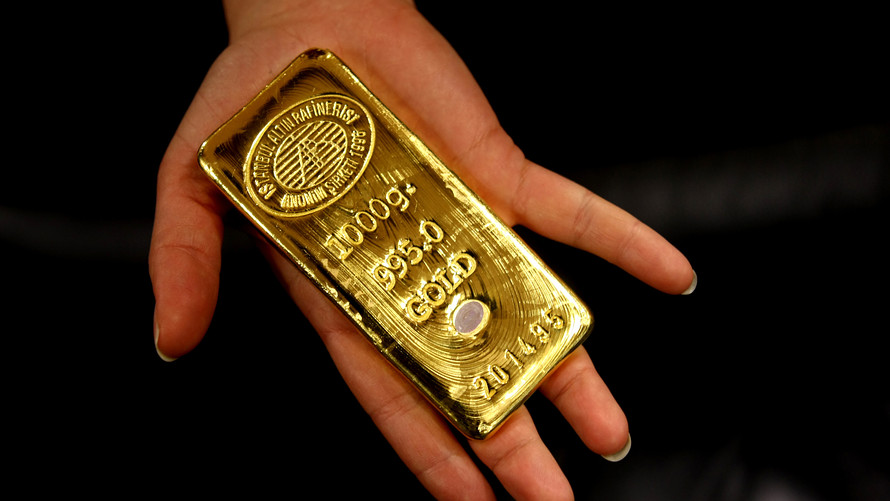
The most widely trusted bullion bars come from refiners on the LBMA Good Delivery List. These refiners must meet the association’s standards for production quality, assaying competence, and responsible sourcing, and they are audited. Each bar carries stamped markings that normally include the refiner’s hallmark, a unique serial number, the fineness, and the assayer’s mark. A large bar from such a refiner is accepted by banks and dealers worldwide on the strength of those markings.
Government and National Assay Offices
In some countries, state or statutory assay offices test and hallmark precious-metal articles. The United Kingdom’s assay offices, for example, test jewellery and stamp a hallmark showing the fineness, the assay office mark, and the sponsor’s mark. Other countries run their own national hallmarking systems with different symbols.
Independent Accredited Laboratories
Independent labs test material submitted by customers: scrap, jewellery, doré (the semi-pure gold-silver bars poured at mines), coins, or bars of uncertain origin. The key credential to look for is ISO/IEC 17025 accreditation, the international standard for testing and calibration laboratories. Accreditation means an independent accreditation body has assessed the lab’s competence, equipment, procedures, and traceability. Critically, accreditation has a scope, a list of the specific tests the lab is accredited for. A lab accredited for gold fire assay by cupellation is a different proposition from a lab that is accredited only for other tests.
Mine and Refinery Laboratories
Mines and refineries operate in-house labs, and many also use external labs for umpire assays when buyer and seller disagree. Umpire assays are an important safeguard in large transactions because they provide a neutral second opinion.
Anatomy of a Gold Assay Certificate: Field by Field
Assay certificates are not identical across issuers, but a credible one normally contains the following elements. Use this as a checklist when you receive a certificate.
- Issuer Identity and Accreditation
The name, address, and contact details of the refiner or laboratory should be clear. If the lab is accredited, the certificate or report usually displays the accreditation body’s logo and the lab’s accreditation number. A genuinely accredited lab will also be listed in the accreditation body’s public directory, where you can confirm the scope covers gold assay.
- Certificate or Report Number
Every legitimate certificate has a unique reference number. This number lets the issuer pull up the original record. A certificate with no reference number, or one that the issuer cannot find in its records, should be treated as unverified.
- Date of Issue (and Date of Test)
The date shows when the assay was performed or certified. It matters because a certificate for a bar manufactured years ago does not prove that the bar in front of you is the same bar. Some reports show both the date the sample was received and the date the result was issued.
- Client Name and Sample or Bar Identification
For a refiner-issued bar certificate, this is the serial number stamped on the bar. For a lab report on submitted material, it is the sample description and the lab’s own sample identifier. The identification must match your item exactly. If the certificate lists serial number 12345 and your bar reads 12354, you do not have a certificate for your bar.
- Description of the Item
This should describe the product: bar, coin, granules, jewellery, scrap, or doré. It often includes the stated brand or refiner and the form of the sample (for example, drilled bar sample or melt sample).
- Gross Weight
Gross weight is the total weight of the item, usually in grams or troy ounces. One troy ounce equals 31.1035 grams. Be careful with units: confusing ordinary ounces (avoirdupois, 28.35 g) with troy ounces is a common and costly mistake.
- Fineness (Purity) Result
This is the main result. Look at the unit carefully. It might be shown as parts per thousand (such as 999.5), as a percentage (99.95%), or as karats. Check for decimal places. A report that says 999.5 and one that says 999.50 may reflect different levels of reporting precision. Also look for wording such as minimum or not less than, which indicates the figure is a guaranteed floor rather than a measured value.
- Fine Gold Content
Many certificates also state the fine gold weight, calculated as gross weight multiplied by fineness. This is the number that drives pricing.
- Test Method
A proper certificate states how the result was obtained: for instance, fire assay by cupellation according to ISO 11426 or ASTM E1335, XRF, or ICP-OES. This line is easy to overlook, and it is one of the most revealing. A certificate from a screening method like XRF is useful but carries a different level of assurance from a cupellation result.
- Measurement Uncertainty or Tolerance
Accredited labs often state the expanded uncertainty of the result, for example 999.5 ± 0.2 parts per thousand. This tells you the range within which the true value is expected to lie. A certificate that reports a result with no uncertainty is not automatically wrong, but the presence of one is a sign of a mature quality system.
- Signature, Stamp, and Security Features
Look for an authorised signatory such as the chief assayer or laboratory manager. Many issuers add a hologram, watermark, QR code, or digital signature. A QR code or online verification link, when it works and leads to the issuer’s own domain, is one of the best ways to confirm authenticity.
- Disclaimers and Scope Statements
The fine print often says the results relate only to the sample received. This clause matters. It means the lab certifies the sample it tested and takes no responsibility for the rest of the lot unless it sampled that lot itself.
Worked Example: Reading a Sample Assay Certificate
Imagine you receive a certificate with the following details:
- Issuer: Example Refining Ltd. (accredited, scope includes gold by cupellation)
- Certificate number: AR-2026-004521
- Item: Cast gold bar, serial number 4521
- Gross weight: 1,000.0 g
- Fineness: 999.9
- Method: Fire assay (cupellation), ISO 11426
- Date of issue: 5 November 2026
Here is how to read it, step by step.
First, confirm the issuer. Look up the lab or refiner in the relevant accreditation or programme directory and confirm the scope covers gold. Second, check the bar. The serial number stamped on the bar must be 4521, and the fineness and refiner’s mark stamped on it should match the certificate. Third, calculate fine gold content: 1,000.0 g × 0.9999 = 999.9 g of pure gold, which equals about 32.15 troy ounces (999.9 ÷ 31.1035). Fourth, contact the issuer using contact details you found independently, not those printed on the certificate, and ask them to confirm certificate AR-2026-004521 and bar 4521.
Only when all four steps agree is the certificate doing its job.
A Quick Formula for Fine Gold Content
Fine gold weight = gross weight × (fineness ÷ 1,000)
For a 100 g bar at 995.0 fineness: 100 × 0.995 = 99.5 g of fine gold, or about 3.199 troy ounces. Multiply that by the day’s spot price per ounce, then apply any dealer premium or discount, to estimate value.
Red Flags: How to Spot a Fake or Misleading Certificate
Certificate fraud usually takes one of two forms: a forged certificate for real or fake gold, or a genuine certificate attached to the wrong item. Both are why the cross-checking steps above matter. Watch for these warning signs:
- No verifiable issuer. The company cannot be found, has no independent contact details, or has no accreditation you can confirm in a public directory.
- Serial number mismatch. The bar and the certificate do not carry the same identifier, or the bar shows signs of tampering or re-stamping.
- Pressure to skip verification. Sellers who insist the certificate is enough, or who discourage you from contacting the issuer, deserve extra suspicion.
- Inconsistent wording or formatting. Spelling errors, mismatched fonts, missing reference numbers, or unclear units are common in forgeries.
- A claimed purity that is implausible. Fineness above 999.9 is not realistic for a commercial product, and a result claiming a suspiciously perfect value with no method or uncertainty deserves questions.
- Method does not match the claim. An XRF-only report offered as proof of a large bullion bar’s fineness is weaker evidence than a cupellation result.
- An old certificate for newly acquired gold. The paper may be genuine, but it may describe a different bar than the one you are buying.
- Heavily discounted gold. Gold priced far below spot is a classic sign of a scam.
Practical Verification Steps
- Contact the issuer independently. Use phone numbers or email addresses from the issuer’s official website, not those on the certificate.
- Check the accreditation directory. Confirm the lab’s accreditation, its current status, and its scope.
- Inspect the bar. Look for the expected markings, even finish, and no signs of tampering or grinding at the stamped area. Sealed assay-card packaging from a refiner should be intact. Be aware that cutting a sealed pack may void a refiner’s repurchase convenience.
- Do independent tests. Weigh the item and measure dimensions to calculate density, then use ultrasonic or conductivity testing for screening. For high-value purchases, commission your own assay from an independent accredited lab.
- Use reputable channels. Buy from established dealers, mints, or refiners who offer buy-back terms and clear provenance.
Assay Certificate, Hallmark, Certificate of Authenticity, and Appraisal: What Is the Difference?
These terms are frequently confused, and sellers sometimes blur them on purpose.
- Assay certificate: a document stating the measured purity (and usually weight) of a specific sample or bar. It is the document that deals with fineness.
- Hallmark: a legally recognised mark stamped on an item by an assay office or approved body, indicating fineness and the testing authority. Hallmarks are common on jewellery and silverware in many countries. Rules differ by country and some do not require hallmarking at all.
- Certificate of authenticity (COA): a general statement by a seller or maker that an item is genuine. A COA is not an independent analysis unless it references a stated method and an accredited lab.
- Appraisal: an opinion of value, often for insurance. An appraisal tells you what an item may be worth, not what it is made of.
A useful rule of thumb: if a document does not state the method, the result, and who produced it, it is not an assay.
Getting Your Own Gold Assayed: What to Expect
If you hold gold of uncertain purity, such as inherited jewelry, scrap, or a bar without papers, an independent assay is worth the cost. Here is how the process generally works.
Choose the right lab. Look for ISO/IEC 17025 accreditation covering gold, or an established refiner that offers assay services. Ask what method they use and whether the result will be a fire assay.
Describe the material. Tell the lab what the item is. Jewelry with solder, stones, or mixed alloys, for instance, may need different handling than a clean bar.
Understand the sampling. Fire assay requires a small sample, so a drill hole or cut will be made. If the item is a sealed refiner bar, ask whether a non-destructive screening test will serve your purpose instead, because breaking the packaging and sampling the bar can affect its resale convenience.
Ask about fees and turnaround. Prices vary by lab and by item. Simple XRF screening is typically quick and low-cost, while fire assay takes longer and costs more because of the labor, consumables, and quality controls involved. Ask for a quote before you ship anything.
Protect the chain of custody. Photograph the item, record serial numbers, use insured and tracked shipping, and ask the lab to confirm receipt weight on arrival. A reputable lab will give you a written record.
Review the report. When it arrives, run through the field-by-field checklist above. Ask the lab to explain anything unclear.
Frequently Asked Questions
What is the most accurate way to assay gold?
Fire assay by cupellation is the most accurate and widely accepted method for determining the fineness of gold bullion. It is the reference method described in ISO 11426 and ASTM E1335, and it can reach precision of a few hundredths of a percent when done by a competent, accredited laboratory.
Is XRF reliable enough to certify gold?
XRF is reliable for rapid screening and for many jewellery and scrap applications, but it measures mainly the surface layer. For high-value bullion, or any item where plating or a hidden core is possible, fire assay is the safer basis for certification.
What does 999.9 fineness mean?
It means the item contains 999.9 parts of pure gold in every 1,000 parts of metal, or 99.99% gold. This is commonly called four nines fine and is the highest purity routinely produced for commercial bars and coins.
How can I tell if an assay certificate is real?
Check the issuer’s accreditation in a public directory, confirm the certificate number and serial number directly with the issuer using independently sourced contact details, and make sure the serial number on your item matches the certificate. Also look at the method, the stated uncertainty, and whether security features such as a QR code lead to the issuer’s own website.
Does a certificate prove the gold is real?
No. A certificate proves only what its issuer tested and signed off. If it is genuine but attached to the wrong bar, or if it is forged, it proves nothing about the gold in your hand. Always verify both the certificate and the item.
What is the difference between an assay and a hallmark?
An assay is a test and its documented result. A hallmark is a legally recognized mark stamped on an article after testing by an assay office or approved body. A hallmark may signify that an item has been assayed, but it does not give the exact measured result the way an assay certificate does.
How much does a gold assay cost?
Costs vary widely by country, lab, method, and quantity. XRF screening is usually the cheapest, ICP analysis is in the middle, and fire assay of a drilled sample typically costs more because of its labor and consumables. Request a written quote that states the method and what the fee includes.
Can sealed assay-card bars be opened and tested?
Yes, but doing so may remove the assurance that comes with the sealed packaging, and some dealers and refiners will not give full buy-back terms for opened packs. If you have doubts about a sealed bar, contact the refiner with the serial number before opening it, and consider non-destructive tests first.
What is dore, and how is it assayed?
Dore is an unrefined alloy of gold and silver, produced at mine sites before final refining. Its gold content varies, and it is usually assayed by fire assay methods designed for materials with a wide range of silver content. The assay result determines how much the refiner pays for the gold and silver it contains.
How long is an assay certificate valid?
There is generally no expiry date, because the purity of a solid gold bar does not change. The practical concern is identity. The certificate stays meaningful only as long as you can show that it belongs to the bar and that the bar has not been altered.
Conclusion: What to Remember Before You Buy, Sell, or Certify Gold
Gold assay is a simple idea carried out with great care: measure the pure gold in a sample, record the result, and let an accountable party stand behind it. Fire assay remains the benchmark, XRF and other tests serve as fast screens, and the certificate is the formal record that ties everything together. When you read one, move through the same sequence every time. Who issued it, are they accredited, does the serial number match, what is the fineness and in what unit, which method was used, what are the weight and uncertainty, and when was it issued? Then verify it with the issuer.
Gold is valuable enough to attract sophisticated fraud, so treat paperwork as a starting point and not an endpoint. If a purchase is large, pay for an independent assay from an accredited laboratory. The cost is small compared with the risk.
By Kyeune, Timothy, refinery assayer/graduate Julius · Reviewed by Kalungi Ochomu, gold market analyst · Last updated: November 10, 2026