Is Gold VAT Free in Europe? Complete 2026 Tax Guide
Yes. Investment gold is exempt from VAT in every EU member state because Article 346 of the EU VAT Directive (2006/112/EC) requires member states to exempt the supply, intra-EU acquisition, and importation of investment gold. In practice, that means gold bars and wafers of at least 995 thousandths fineness, and gold coins of at least 900 thousandths fineness that meet the directive’s coin criteria, are sold with 0% VAT. Outside the EU, the United Kingdom and Switzerland also treat investment gold as VAT-free under their own rules.
There are two big catches. First, only investment gold qualifies. Gold jewelry, collectors’ coins sold for their numismatic value, and gold below the purity thresholds are normally subject to the standard VAT rate, and silver, platinum, and palladium are VAT-able almost everywhere. Second, no VAT does not mean no tax. When you sell, you may owe capital gains tax or a flat tax on gold, and the rules differ sharply by country: in 2026 a private seller can pay nothing in Germany after a one-year hold, 26% on gains in Italy, or a choice between an 11.5% flat tax and a gains-based tax in France.
Key Takeaways
- Gold bars (995‰+) and qualifying gold coins (900‰+) are VAT-exempt in all EU countries. The EU publishes a yearly list of coins that automatically qualify.
- Silver, platinum, and palladium carry VAT, for example, 19% in Germany, 20% in the UK, and 21% in the Netherlands and Spain.
- Capital gains rules are national, not European. Germany, Belgium, and Switzerland are generally tax-friendly for private holders, while Italy and France are comparatively heavy.
- UK Sovereigns and Britannias are free of capital gains tax because they are legal tender, while gold bars and foreign coins are not.
- Keep your purchase invoices. In Italy and France, the absence of proof of your purchase price can cost you real money at sale.
- Rules change. Several rates moved in 2025 and 2026, so confirm current figures with your tax authority or adviser before you buy or sell.
What Counts as Investment Gold Under EU VAT Law?
The VAT exemption does not apply to anything labelled gold. It applies to a specific legal category called investment gold, defined in Article 344 of the VAT Directive. In plain language, there are two main product types.
- Gold bars and wafers
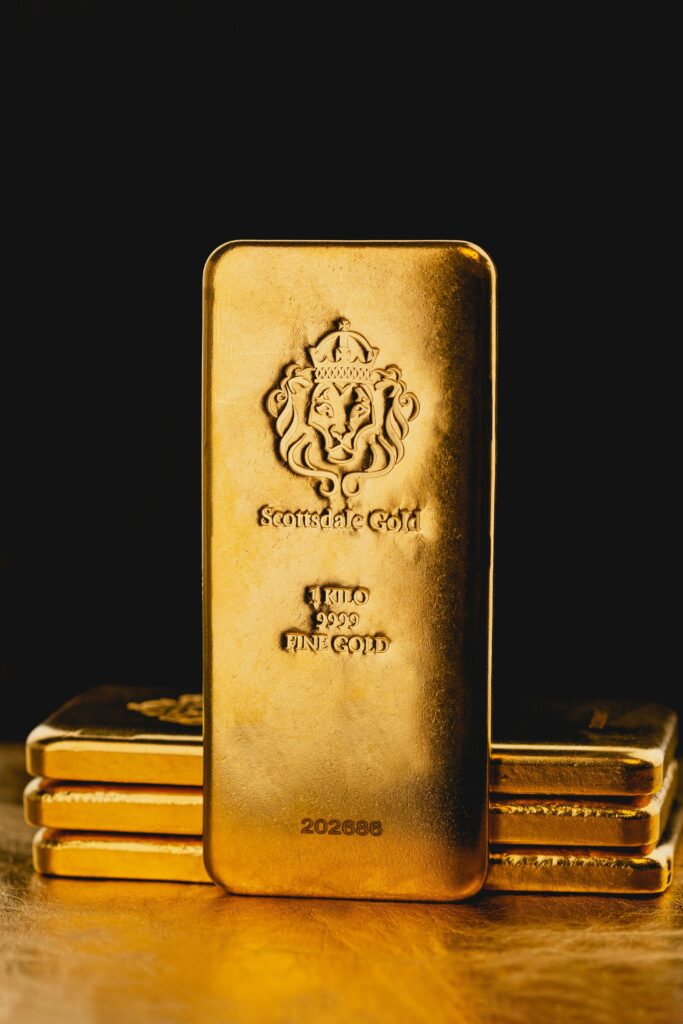
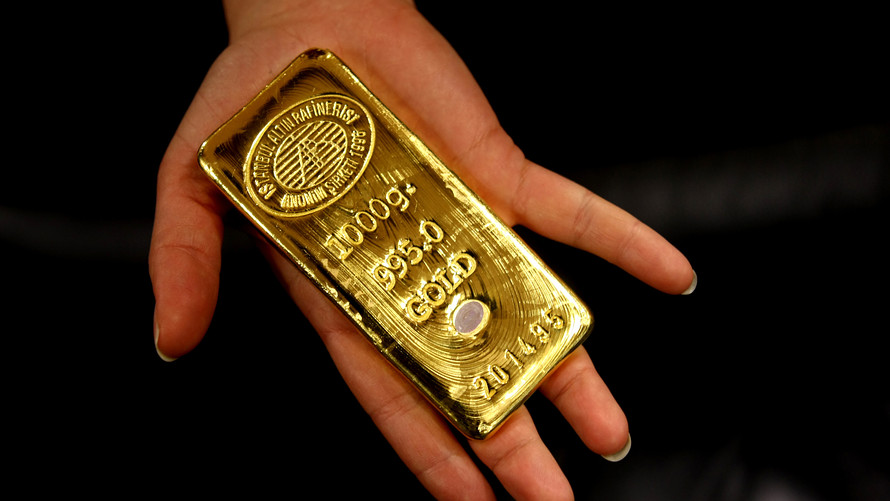
Gold in bar or wafer form of a weight accepted by the gold markets, with a purity of at least 995 thousandths, qualifies. In practice this covers standard bullion bars from 1 gram up to the large bars traded between banks, as long as they meet the fineness threshold. A 24-karat bar stamped 999.9 comfortably qualifies, while an 18 karat bar (750 fineness) does not.
- Gold coins
Gold coins qualify when they meet all of these conditions, according to Article 344:
- Purity of at least 900 thousandths
- Minted after 1800
- Legal tender in the country of origin
- Normally sold at a price that does not exceed the open-market value of the gold they contain by more than 80%, meaning the price is no more than 180% of the gold value
The directive also says coins meeting these criteria are not regarded as sold for numismatic interest. That detail matters, because a rare coin that is priced mainly for its collector value does not enjoy the exemption.
The annual EU list of qualifying coins
Each year the European Commission publishes a list of coins that member states report as meeting the criteria. The list for 2026 was published in the Official Journal on 14 November 2025 (C/2025/5923). Its explanatory note makes three points worth knowing:
- Listed coins are treated as investment gold, so their supply is exempt from VAT for the whole calendar year.
- The exemption does not cover issues of listed coins with a purity below 900 thousandths.
- A coin missing from the list can still be exempt if it meets the criteria in the directive.
In other words, the list is a convenience and a safe harbor, not the final word. If you are buying a lesser-known coin, ask the dealer in writing how it is treated for VAT, and check the official list for the relevant year.
Other things the exemption covers
Article 346 extends the exemption beyond physical metal. It also covers investment gold represented by certificates for allocated or unallocated gold, gold held on gold accounts, gold loans and swaps, and futures and forward contracts that transfer ownership or claims on investment gold. Traders and producers have extra rights and duties. For instance, businesses that produce investment gold can deduct input VAT connected with that production, and traders must keep records of substantial transactions and documents identifying customers. These record-keeping rules are the reason you will be asked for identification when you buy gold from a regulated dealer.
The option to tax
Member states may let certain businesses opt to charge VAT on supplies of investment gold to another taxable person, which would otherwise be exempt. This is a business-to-business technicality. Private investors buying from a dealer normally never see it, but if you run a company that buys gold, ask your adviser how your country applies the option.
What Is Not VAT-Free: Silver, Platinum, Jewelry, and Collectibles
Many people hear that gold is VAT-free and assume the same applies to all precious metals. It does not. Here is where VAT usually does apply:
- Silver, platinum, and palladium bullion. These are subject to the standard VAT rate in most European countries, with some dealers using margin schemes for certain coins or second-hand items. Standard rates in 2026 include Germany 19%, France 20%, the UK 20%, Austria 20%, Italy 22%, Spain 21%, the Netherlands 21%, Poland 23%, Sweden 25%, and Switzerland 8.1%.
- Gold jewelry. Jewelry is a consumer product, not investment gold, so it attracts standard VAT.
- Gold bars or coins below the purity thresholds. A 585-fineness bar or a 22-karat medal that does not satisfy the coin criteria is generally not exempt.
- Numismatic and collectors’ pieces. Rare coins priced mainly for rarity, or coins that fail the 180% test, may be taxed.
- Services around the metal. Storage, insurance, and some fabrication or refining charges can carry VAT even when the metal itself does not. Article 355 of the directive deals with VAT on services consisting of a change of form, weight, or purity of gold, so check how your provider handles it.
The practical effect is large. VAT of 19% to 25% on silver or platinum is a built-in cost that gold investors avoid. It is one reason silver investors often look at products from vendors in countries or schemes with lower VAT, and why those choices need careful checking of where tax is due on delivery.
VAT-Free Is Not Tax-Free: The Other Taxes to Know About
VAT is only the entry fee. Four other tax categories matter to a European gold investor.
Capital gains and flat taxes on sale
This is the biggest variable. Some countries tax your profit under their general capital gains regime, others apply a special flat tax to precious metals, and some leave private gains untaxed after a holding period. Details by country follow below.
Wealth or asset-based taxes
A few countries tax net wealth or assumed returns on assets, which can sweep in physical gold or gold funds. The Netherlands, for instance, taxes a deemed return on savings and investments in what is known as Box 3, and the rules have been under reform. Spain has a wealth tax regime that varies by region.
Inheritance and gift taxes
Gold passed on by inheritance or gift can attract estate or gift tax, and in some countries the tax value of the gold at death becomes your cost basis for later capital gains. Keep records of the date and value declared in the inheritance paperwork.
Reporting and anti-money-laundering rules
Even where no tax is due, you may face reporting duties. Dealers must identify customers and record substantial transactions under the VAT Directive and anti-money-laundering rules. Some countries require residents to declare gold held abroad, or to report gold carried across borders in a similar way to cash. Cash limits on large purchases are also tightening across the EU, so ask your dealer which payment methods are accepted for large orders.
Investment Gold Tax Rules by Country
The summaries below describe the position for private individuals investing in physical gold, as of November 2026. They are simplified, and individual circumstances such as trading as a business, residency changes, or inherited gold can change the answer.
Germany
VAT: Investment gold is exempt under Section 25c of the German VAT Act, which implements the EU directive. Silver is subject to 19% VAT, although some silver coins are sold under the margin scheme (Differenzbesteuerung), which changes how VAT is calculated for the buyer.
Capital gains: Germany is among the friendliest major jurisdictions for private holders. Gains from selling physical gold held as a private asset are taxed under the private sales rules in Section 23 of the Income Tax Act, and gains are tax-free if the gold was held for more than one year. If you sell within one year, the gain is added to your income and taxed at your personal rate. A small annual allowance for private sales gains may apply, so check the current threshold.
Gold ETCs and funds: Different. Gains on gold-related securities and exchange-traded products are generally subject to the flat tax of 25% plus the solidarity surcharge, regardless of how long you hold them. Some ETCs with a physical delivery right are treated differently, so check the product terms.
France
France has one of the most distinctive systems in Europe. When you sell gold bars or coins, you choose between two regimes.
The flat tax on precious metals (taxe forfaitaire): 11.5% of the total sale price, made up of 11% tax plus 0.5% CRDS. It applies from the first euro, regardless of whether you made a profit, and it is usually withheld by the buyer. It is the default if you cannot prove your purchase date and price.
The capital gains regime (plus-value sur biens meubles): You can opt to be taxed on the actual gain, which requires proof of the purchase price and date. Until 2025, the combined rate was 36.2% (19% income tax plus 17.2% social charges). Reports for 2026 indicate the rate rose to 37.6% because of a social-charges increase in the 2026 social security budget. The advantage is a 5% annual allowance from the third year of holding, leading to full exemption after 22 years.
Which is better? A simple rule: if you made little or no gain, or have held the gold for a very long time, the gains regime can be cheaper. If you made a large gain after a short hold, the flat tax is often cheaper. Non-residents selling gold in France are, according to dealer guidance, exempt from the flat tax, but check your own country’s rules.
For jewelry and similar items, a separate flat tax on precious objects applies at 6.5% only above a threshold of 5,000 euros per sale.
Italy
VAT: Investment gold is exempt, so purchases are VAT-free.
Capital gains: Italy tightened its rules recently. Under the new law, capital gains made by private individuals on the sale of investment gold are subject to a flat rate tax of 26%. The rule extends to other precious metals such as silver and platinum. Because many sellers cannot produce valid purchase documentation, the tax is in many cases applied to the entire sale price, which can wipe out most of the actual profit. For inherited gold, the tax value is the one in the inheritance declaration, and for donated gold it is the donor’s value.
Holding and reporting: Holding investment gold in Italy as a resident triggers no tax or declaration. Gold held abroad must be reported annually in the income tax return together with other foreign assets, and transferring gold out of Italy must be reported in a way similar to cash transfers. Gold ETFs and ETCs are also taxed at a flat 26%, with extra reporting if held abroad.
Spain
VAT: Investment gold is zero-rated or exempt, consistent with the EU scheme. Silver carries 21% VAT.
Capital gains: Gains from selling gold are treated as savings income and taxed on a progressive scale that currently starts at 19% and rises to the high twenties or above for large gains. There is no special holding-period relief for gold. Regional rules can affect related taxes, such as wealth tax. Residents holding assets abroad should check foreign asset reporting rules.
Netherlands
VAT: Investment gold is VAT-exempt. Gold jewelry and items that do not qualify as investment gold are not.
Taxation of holdings: The Netherlands does not tax individual gold gains the way Italy or France do. Instead, physical gold held as an investment fall in Box 3, the regime that taxes a deemed return on net assets above an allowance. The Box 3 rules have been in flux because of court rulings and planned reforms, so confirm the current system for the year in question.
Belgium and Switzerland
In Belgium and Switzerland, private individuals who hold gold as part of normal wealth management generally do not pay capital gains tax on sales, although rules on professional or speculative trading can change that. Switzerland is outside the EU and has its own VAT law. Investment gold is generally VAT-free there, while silver carries Swiss VAT of 8.1%. Switzerland also does not tax private capital gains on movable assets. If you buy from a Swiss vendor and ship into the EU, expect your destination country to apply its own import VAT or customs rules where relevant, especially to silver and platinum.
United Kingdom
The UK left the EU, but investment gold is also exempt from VAT under the Value Added Tax Act 1994, Schedule 9, Group 15. Silver and platinum bullion carry 20% VAT.
The UK capital gains picture has two sides:
- UK legal tender coins are exempt from CGT. Sovereigns minted from 1837 onwards and Britannia’s are treated as sterling currency under section 21 of the Taxation of Chargeable Gains Act 1992, so gains on them are exempt, no matter how large, and do not use any of your annual allowance.
- Gold bars and most foreign coins are chargeable. For 2026/27, the annual exempt amount is £3,000, and gains above it are taxed at 18% for basic-rate taxpayers and 24% for higher and additional-rate taxpayers.
Because the annual allowance has fallen sharply, from £12,300 in 2022/23 to £3,000 now, the exemption for legal tender coins has become more valuable.
Other European countries
Rules in other countries follow the same pattern: VAT-free investment gold under the EU scheme, with national capital gains rules that differ. Some countries tax gains at a flat rate on assets sold quickly, some apply the general capital gains regime, and some, like Germany, reward long holding periods. If your country is not covered above, look for guidance from the national tax authority on precious metals, and ask a local tax adviser to confirm how gold fits into your income tax and wealth tax situation.
Quick Comparison Table: Gold Taxes in Key European Countries (2026)
| Country | VAT on investment gold | VAT on silver | Tax when a private individual sells gold (summary) |
| Germany | 0% | 19% | Tax-free after more than 1 year; otherwise taxed as income |
| France | 0% | 20% | 11.5% flat tax on the sale price, or gains-based tax (37.6% reported for 2026) with allowances; exempt after 22 years under the gains regime |
| Italy | 0% | 22% | 26% flat tax on gains (often applied to the full price without documents) |
| Spain | 0% | 21% | Progressive savings-income rates starting at 19% |
| Netherlands | 0% | 21% | No gains tax as such; assets fall in Box 3 (rules under reform) |
| Belgium | 0% | Standard rate | Generally, no tax for normal private management |
| Switzerland | 0% (own rules) | 8.1% | Generally, no tax on private capital gains |
| United Kingdom | 0% | 20% | Legal tender coins exempt; bars and foreign coins taxed at 18% or 24% above £3,000 |
Always confirm figures against the latest official guidance. Rates and allowances change.
Worked Examples: What You Actually Pay When You Sell
The numbers below are simplified illustrations using rates described above. They ignore dealer spreads, fees, and personal circumstances.
Example 1: Germany
You buy a 100 g bar for €10,000 and sell it later for €13,000, a gain of €3,000.
- Held 13 months: Tax on the gain is €0.
- Held 8 months: The €3,000 gain is added to your taxable income. At a 30% personal rate, you owe about €900.
Example 2: Italy
Same bar, same €3,000 gain.
- With purchase invoice: 26% of €3,000 is €780.
- Without proof of purchase price: If the tax is applied to the sale price, 26% of €13,000 is €3,380, which is more than the entire profit.
Example 3: France
You sell a gold bar for €10,000.
- Flat tax: 11.5% of €10,000 is €1,150, whether or not you made a profit.
- Gains regime: Suppose you bought it for €8,000 five years ago, so the gain is €2,000. With roughly three years of 5% allowances counted (about 15%), the taxable gain is about €1,700. At 37.6%, tax is about €639. With proof of purchase and a long hold, this route can be cheaper.
Example 4: United Kingdom
You sell a gold bar and make a £10,000 gain, and you have no other gains this tax year.
- Taxable gain: £10,000 minus £3,000 allowance, which is £7,000.
- Basic-rate taxpayer: 18% gives £1,260.
- Higher-rate taxpayer: 24% gives £1,680.
- If the same gain were made on Sovereigns or Britannias: tax is £0.
The lesson is that the same profit can produce radically different bills depending on where you live, how long you held the gold, which product you bought, and whether you kept your paperwork.
Buying Gold Across Borders: VAT on Delivery and Imports
Shopping online from dealers in other countries is easy, but VAT and customs rules still apply.
Within the EU: Because investment gold is exempt everywhere, buying it from a dealer in another EU member state is normally VAT-free for you as well. For silver and platinum, VAT rules for distance sales usually depend on where the goods are delivered, so you may pay the VAT rate of your own country, and some dealers apply rules for the destination country.
From outside the EU: Goods imported into the EU generally face customs and import VAT rules, although investment gold is exempt from VAT on importation under Article 346. Silver and platinum from outside the EU are likely to attract import VAT at your country’s rate, and non-qualifying items can attract customs duties. Switzerland is a common source, and a buyer shipping silver from Switzerland into France can face Swiss VAT at the point of sale and French VAT on delivery unless the seller handles export correctly.
Storage abroad: If you store gold in a vault in another country, check reporting duties in your home country. Italian residents, for example, must report gold held abroad in their annual income tax return.
Cash and identification: Expect to show identification when buying from regulated dealers, and expect limits on cash for large purchases. The EU has adopted rules that will cap large cash payments across the bloc, so confirm the exact limits and the dates they apply.
A Practical Checklist Before You Buy or Sell Gold in Europe
- Confirm the product qualifies as investment gold. Check fineness (995‰+ for bars, 900‰+ for qualifying coins), and for coins check the current EU list.
- Get a proper invoice that shows the product, weight, fineness, price, and VAT treatment. Keep it for as long as you own the gold, and after.
- Know your country’s tax on sale before you buy. If you live in a country with a flat tax or a harsh regime, compare physical gold with alternatives, and compare product types where the law differentiates between them, as in the UK.
- Track your holding period. In Germany, the one-year mark is decisive, and in France the allowance builds from the third year.
- Check the reporting rules for gold stored abroad or moved across borders.
- Ask about silver and platinum separately. Do not assume the gold VAT exemption applies to them.
- Document inherited or gifted gold. Keep the inheritance declaration or the donor’s records.
- Speak to a tax adviser if the amounts are significant or your situation crosses borders.
Frequently Asked Questions
Is gold VAT-free in all of Europe?
In all EU member states, yes, for investment gold. The UK and Switzerland, which are not in the EU, also exempt investment gold under their own laws. Gold that does not meet the legal definition, such as jewellery or low-purity bars, is generally not exempt.
Is silver VAT-free in Europe?
No, not in most countries. Silver, platinum, and palladium are normally subject to the standard VAT rate, such as 19% in Germany, 20% in the UK, and 21% in Spain and the Netherlands. Some coins and second-hand items can be taxed under margin schemes, which changes how VAT is calculated.
What is the minimum purity for VAT-free gold?
Bars and wafers need at least 995 thousandths fineness. Coins need at least 900 thousandths, plus the other criteria: minted after 1800, legal tender in the country of origin, and normally sold at no more than 180% of the value of the gold content.
Do I pay tax when I sell gold in Germany?
Not if you held the physical gold for more than one year as a private investor. If you sell within a year, the gain is taxed at your personal income rate. Gold ETCs and similar products are taxed differently, usually under the flat tax on securities.
Which European country taxes gold the most?
It depends on how you measure it, but Italy and France are generally regarded as heavier than Germany, Belgium, or Switzerland. Italy applies a 26% flat tax on gains, and France offers either an 11.5% flat tax on the sale price or a gains-based tax of 37.6% reported for 2026, with allowances over time.
Are UK Sovereigns and Britannia’s really exempt from capital gains tax?
Yes. They are UK legal tender, and HMRC treats them as sterling currency, so gains are outside the scope of capital gains tax. Gold bars and most foreign coins, including Krugerrands, are chargeable once your gains exceed the annual exempt amount.
Do I need to declare gold I own?
It depends on your country. In Italy, holding gold within the country triggers no declaration, but gold held abroad must be reported. Other countries have their own asset-reporting or wealth tax rules. Check with your tax authority.
Does buying gold through an ETF change the tax?
Usually yes. Gold ETFs and ETCs are typically taxed as securities, so a country that is generous to physical gold, such as Germany, can still apply its flat tax on gains from ETCs. Compare physical and paper gold in your country before you decide.
Is gold VAT-exempt when bought online from another EU country?
In principle yes, since investment gold is exempt EU-wide, but always check the dealer’s invoice. Silver and other metals may be charged VAT at the rate that applies to your delivery address.
Can the rules change?
Yes. Several countries changed gold tax rules recently, including Italy’s new flat tax and France’s higher rate for the gains regime in 2026. The EU also updates its coin list every year. Check current guidance before any large transaction.
Conclusion: Gold Is VAT-Free, but Your Tax Bill Depends on Where You Live
The headline answer is clear: investment gold is exempt from VAT across the European Union, and in the UK and Switzerland as well. That exemption covers bars of at least 995 thousandths and qualifying coins of at least 900 thousandths, but not jewellery, collectors’ pieces, or other precious metals like silver and platinum. The real differences appear when you sell. Germany rewards patience; Italy and France collect heavily if you cannot document your cost, the UK offers an unlimited exemption on its own legal tender coins, and the Netherlands looks at your whole asset base instead of your gold gain.
Before buying, check the product, keep your invoice, understand your country’s tax on sale, and confirm current rates with an official source or a qualified adviser. A small amount of homework can easily save more than the VAT you were hoping to avoid.
Note: This article is general information, not tax, legal, or investment advice. Rates, allowances, and rules change and depend on your residency and circumstances. Verify every figure against official sources, and consult a qualified adviser before acting. Where this article gives reported 2026 figures, such as the French gains regime rate, confirm them against the official source before publishing.