
Best Guide| List of Gold Refineries in South Africa 2026
South Africa is home to some of the world’s most trusted and advanced gold refineries, with Rand Refinery in Gauteng being the most authoritative and globally recognized facility, refining a significant share of Africa’s gold to LBMA (London Bullion Market Association) standards, which guarantees international-grade purity and acceptance. In simple terms, if you are looking for secure, certified, and export-ready gold from Africa in 2026, South Africa’s refineries, led by Rand Refinery, are among the safest and most credible sources in the world, offering gold bars and products that meet strict quality, traceability, and ethical sourcing requirements used by global banks and institutional investors.
South Africa’s gold refining industry has built its reputation on decades of mining expertise, strict regulatory oversight, and advanced metallurgical technology. These refineries process raw gold sourced from both large-scale mining operations and approved suppliers, ensuring every bar is assayed, refined, and documented with full compliance records. This includes assay certificates, chain-of-custody documentation, and export verification, which are essential for international buyers who require transparency and legal assurance. For investors in 2026, this makes South African refineries a benchmark for purity, reliability, and global market trust, especially when compared to less-regulated gold markets across the continent.
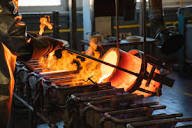
List of Gold Refineries in South Africa
| Refinery Name | Location | Type | Key Strength | Certification / Status |
| Rand Refinery | Germiston, Gauteng | Primary Gold Refinery | Largest in Africa; processes ~70–75% of Africa’s gold | LBMA Good Delivery accredited |
| Metalor Technologies South Africa | Johannesburg | Precious Metals Refinery | Global Swiss-backed refining standards | LBMA accredited |
| Heraeus South Africa | Port Elizabeth / Gauteng operations | Precious Metals Refining & Trading | Advanced refining technology and industrial metals expertise | LBMA affiliated (group level) |
| DRDGOLD (Ergo Mining Refining Operations) | East Rand, Gauteng | Gold Recovery & Refining | Tailings retreatment and gold recovery from waste dumps | Licensed industrial operations |
| Rand Refinery Associated Refining Partners | Gauteng | Contract Refining Facilities | Supports mining companies with refining services | Industry compliant |
| South African Mint (Precious Metals Division) | Centurion | Semi-refining / Coin production | Produces Krugerrands and investment coins | South African Reserve Bank linked |
What is a Gold Refinery and Why It Matters in South Africa?
A gold refinery is an industrial facility where raw gold, often mined in the form of ore, doré bars, or recycled materials, is processed and purified into high-quality bullion. The main purpose of a refinery is to remove impurities such as silver, copper, and other base metals, transforming raw material into investment-grade gold with purity levels ranging from 99.5% to 99.99% (24K standard). This refined gold is then cast into bars, coins, or granules that meet international trading and banking standards.
In South Africa, gold refineries play a critical role in the national and global economy because the country is one of the world’s historic gold producers and refining centers. Facilities such as Rand Refinery ensure that South African gold meets LBMA (London Bullion Market Association) standards, making it acceptable in global financial markets without additional testing. This guarantees purity, traceability, and international credibility, which are essential for exports and institutional investment.
Gold refineries in South Africa also matter because they support export compliance and legal trade systems. Operating under strict regulations, including the Precious Metals Act and oversight from SADPMR, these refineries ensure that all gold is properly documented, ethically sourced, and legally exported. This reduces the risks of fraud, smuggling, and counterfeit gold in the supply chain.
Ultimately, gold refineries are the backbone of trust in the gold industry. They connect African mining output to the global market by ensuring that every bar of gold is scientifically purified, legally verified, and internationally recognized, making South Africa one of the most trusted gold refining hubs in the world.
The Giant of Africa: Rand Refinery and the Global Standard
Rand Refinery stands as the undisputed heavyweight of Africa’s gold refining industry, processing an estimated 70–75% of all newly mined gold on the continent and playing a critical role in connecting African production to the global bullion market. Established in 1920 in South Africa’s Gauteng province, it has evolved into one of the world’s most trusted refining institutions, supplying investment-grade gold bars and products that meet strict international standards used by central banks, institutional investors, and global bullion traders. In practical terms, Rand Refinery is not just a refinery; it is a global gateway that converts African raw gold into fully certified, export-ready bullion accepted worldwide.
A major reason for its dominance is its LBMA (London Bullion Market Association) accreditation, which places Rand Refinery on the prestigious “Good Delivery” list. This certification ensures that its gold bars meet globally recognized standards for purity (typically 99.5%–99.99%), weight accuracy, and traceability, making them immediately tradable in major financial hubs such as London, Dubai, Zurich, and New York without additional testing. For buyers and investors in 2026, LBMA accreditation is the highest assurance of legitimacy in the gold market, effectively eliminating counterparty risk and guaranteeing that every bar produced by Rand Refinery is globally accepted as investment-grade bullion.
In 2026, Rand Refinery has also accelerated its integration of blockchain-based “mine-to-vault” traceability systems, a major advancement in gold transparency and ethical sourcing. This system digitally records every stage of the gold lifecycle from extraction at approved mines, through transportation, refining, and final storage or export, creating an immutable ledger that verifies origin, ownership, and compliance. For international buyers, this innovation significantly strengthens confidence by ensuring that gold is not only pure and certified but also fully traceable and ethically sourced, aligning with global ESG (Environmental, Social, and Governance) standards. This combination of industrial scale, LBMA certification, and blockchain transparency firmly positions Rand Refinery as the benchmark for gold purity and trust in Africa and beyond.
How to Verify a Legit Gold Refinery Before Buying Gold (2026 Guide)
| Verification Step | What to Check | Why It Matters | Proof or Document to Request |
| 1. LBMA Certification | Check if the refinery is on the LBMA Good Delivery List | Ensures global acceptance and gold purity standards (99.5%–99.99%) | LBMA listing confirmation or certificate |
| 2. Government Licensing | Verify registration with national mining or financial authorities | Confirms the refinery is legally allowed to operate | Operating license, company registration number |
| 3. Physical Address & Facility | Confirm real refinery location (not just an office) | Prevents fake or shell companies | Site address, Google Maps verification, site visit |
| 4. Assay & Purity Reports | Check gold purity testing results | Ensures authenticity of 24K or 22K gold | Assay certificate from an accredited lab |
| 5. Chain of Custody | Track gold from mine to refinery to buyer | Prevents conflict or illegally sourced gold | Traceability documents or blockchain records |
| 6. Export Compliance | Confirm legal export authorization | Ensures gold can be legally shipped internationally | Export permits, customs clearance documents |
| 7. Reputation & Trade History | Check international buyers, banks, and partners | Shows trust and credibility in global markets | Trade references, client portfolio |
| 8. Secure Logistics Partners | Verify use of insured transport companies | Protects high-value shipments during transit | Brinks / Malca-Amit-style shipping contracts |
| 9. Payment Security | Confirm safe transaction methods (escrow, bank SWIFT) | Reduces fraud risk in large gold deals | Payment agreement, escrow contract |
| 10. Third-Party Inspection | Independent verification before purchase | Adds unbiased confirmation of gold quality | Inspection report from certified agent |
NOTE. A legitimate gold refinery will always provide full transparency, verifiable documentation, and international compliance proof. If any of these steps are missing or unclear, the risk of fraud increases significantly—especially in cross-border gold transactions.
Comparison of Gold Refineries: South Africa vs Ghana vs Uganda (2026 Guide)
| Factor | South Africa Refineries | Ghana Refineries | Uganda Refineries |
| Main Refinery Hub | Rand Refinery (dominant), Metalor SA, Heraeus | PMMC-linked refineries, Gold Coast Refinery | Uganda Gold Refinery (UGR) |
| Industry Maturity | Highly developed (over 100 years of refining history) | Well-developed and expanding | Emerging but fast-growing refining sector |
| Global Recognition | Very high (LBMA Good Delivery accredited) | High (regional + growing international trust) | Moderate (regional recognition, improving global visibility) |
| Gold Quality Standard | LBMA-certified 99.5%–99.99% purity | High purity, often LBMA-aligned processes | High purity, improving assay consistency |
| Export Strength | Strong global export network (banks, bullion markets) | Strong export system through regulated channels | Developing export systems with government oversight |
| Regulatory Authority | South African Reserve Bank + mining regulators | Minerals Commission / PMMC | Ministry of Energy and Mineral Development (MEMD) |
| Traceability Systems | Advanced (including blockchain integration in some systems) | Strong documentation and tracking | Improving traceability systems |
| Investor Trust Level | Very High | High | Medium–High (growing rapidly) |
| Market Pricing Influence | Strong influence on global gold pricing | Regional pricing influence | Competitive local pricing |
| Best For Buyers | Institutional investors, large bullion buyers | International traders and exporters | Cost-sensitive buyers and emerging investors |
South Africa Gold Production & Export Statistics
| Indicator | 2025 Estimate | 2026 Forecast | Trend | Key Insight |
| Annual Gold Production | ~90–110 metric tons | ~85–105 metric tons | Slight decline | Output continues to decrease due to deeper mining costs and aging mines |
| Refined Gold Output | ~70–80% processed locally | ~75–85% processed locally | Stable to improving | Strong role of Rand Refinery and local refining capacity |
| Gold Export Value (USD) | $5.5 – $7.2 billion | $5.8 – $7.8 billion | Moderate growth | Driven by higher global gold prices despite lower output |
| Main Export Destinations | Switzerland, UK, UAE, India | Switzerland, UAE, UK, China | Expanding diversification | Strong demand from global bullion and jewelry markets |
| Top Export Product | LBMA-certified gold bars | LBMA-certified gold bars | Stable | Investment-grade bullion remains the dominant export form |
| Recycled / Secondary Gold Share | 8–12% | 10–15% | Increasing | Growth in the urban mining and e-waste recycling sector |
| Employment in the Gold Sector | ~90,000–110,000 jobs | ~85,000–105,000 jobs | Slight decline | Mechanization and mine closures are impacting labor |
| Global Market Rank | Top 10 globally | Top 10 globally | Stable | South Africa remains a key global gold supplier |
Emerging Gold Refiners in South Africa: Specialized & Secondary Players (2026 Guide)
| Refinery / Company | Type of Refiner | Main Function | Materials Processed | Key Role in the Gold Industry | Strength |
| Impala Refining Services (IRS) | Large-scale secondary industrial refiner | Recovery and refining of precious metals from complex inputs | Platinum group metals (PGMs), gold by-products, industrial residues, scrap catalysts | Supports circular economy by recovering gold and PGMs from industrial waste and mining by-products | High-capacity industrial refining with strong global integration |
| Kusasa Refining | Specialized niche refiner | Custom refining, sampling, and small-scale purification | Scrap gold, mixed ores, small mining outputs, and industrial materials | Provides flexible refining solutions for junior miners, traders, and scrap suppliers | Agile, client-focused processing and assay services |
| Other Secondary Refiners (South Africa ecosystem) | Small-to-medium refiners | Pre-refining, sampling, and recycling services | Electronic waste, jewelry scrap, and low-grade ore | Feed material into major refineries like Rand Refinery | Improves efficiency and resource recovery in supply chain |
NOTE. Secondary refiners such as Impala Refining Services and Kusasa Refining play a crucial role in South Africa’s gold ecosystem by processing recycled gold, industrial by-products, and complex ores, ensuring that valuable metals are recovered efficiently. While they may not dominate global bullion markets like Rand Refinery, they are essential for sustainability, recycling innovation, and supply chain efficiency in the 2026 gold industry.
Regulations for Gold Refining in South Africa
| Regulatory Area | Governing Body / Law | Key Requirement | Purpose / Why It Matters | Impact on Buyers & Investors |
| Mining & Refining Law | Precious Metals Act (2005) | All gold mining, refining, and trading must be licensed | Prevents illegal mining and ensures legal gold flow | Ensures gold is legally sourced and safe to trade |
| Industry Regulator | SADPMR (South African Diamond and Precious Metals Regulator) | Licensing, audits, and compliance inspections | Enforces legal trade and refinery operations | Builds trust in refinery legitimacy |
| Export Control | South African Customs & Excise | Export permits required for all gold shipments | Prevents smuggling and illegal exportation | Guarantees legal international shipment |
| Purity Standards | LBMA (London Bullion Market Association) | Gold must meet 99.5%–99.99% purity for Good Delivery status | Ensures global acceptance of gold bars | Enables gold to be sold in global markets |
| Refinery Certification | LBMA / Industry Accreditation | Refineries must pass strict operational and ethical audits | Ensures refinery credibility and quality control | Protects buyers from counterfeit or low-grade gold |
| Environmental Compliance | National Environmental Management Laws | Control emissions, waste, and chemical use in refining | Reduces environmental damage from refining processes | Ensures sustainable and ethical gold production |
| Traceability Requirements | Industry + ESG Standards | Full documentation from mine to the refined bar | Ensures transparency and ethical sourcing | Buyers can verify gold’s origin and authenticity |
| Financial Compliance | South African Reserve Bank (SARB) | Large transactions must follow financial reporting rules | Prevents money laundering and illegal finance flows | Ensures secure and traceable payments |
NOTE. South Africa’s gold refining industry is highly regulated, combining national laws (Precious Metals Act, SADPMR oversight) with international standards (LBMA compliance). This dual system ensures that all refined gold is legal, traceable, environmentally responsible, and globally accepted, making South Africa one of the most trusted gold markets in the world.
LBMA Gold Refineries in South Africa (2026 Overview)
| Refinery Name | Location | LBMA Status | Main Function | Gold Purity Standard | Key Importance |
| Rand Refinery | Germiston, Gauteng | LBMA Good Delivery Listed | Primary gold refining (mine doré to bullion bars) | 99.5% – 99.99% | Africa’s largest refinery processes the majority of South Africa’s gold output |
| Metalor Technologies South Africa | Johannesburg | LBMA accredited (global group listing) | Precious metals refining and industrial processing | Up to 99.99% | Strong international reputation in bullion and industrial metals |
| Heraeus South Africa | Gauteng / Port Elizabeth operations | LBMA-affiliated (group-level accreditation) | Advanced refining, trading, and precious metals processing | 99.5% – 99.99% | Global metals leader with strong technical refining expertise |
Where is Gold Refined in South Africa?
| Refinery / Facility | Location | Type of Refining | Main Function | Certification / Status | Key Importance |
| Rand Refinery | Germiston, Gauteng | Primary gold refining | Converts mined gold (doré) into bullion bars | LBMA Good Delivery accredited | Processes ~70–80% of South Africa’s gold; global standard setter |
| Metalor Technologies South Africa | Johannesburg | Precious metals refining | High-purity refining and industrial metals processing | LBMA accredited (group level) | Supplies international bullion and industrial markets |
| Heraeus South Africa | Gauteng / Port Elizabeth operations | Precious metals refining & trading | Advanced refining and metallurgical processing | LBMA affiliated (group level) | Global expertise in precious metals refining |
| Impala Refining Services (IRS) | Springs / East Rand region | Secondary refining | Recovers gold and PGMs from industrial materials | Licensed industrial refinery | Key player in recycling and by-product recovery |
| DRDGOLD (Ergo Plant) | East Rand, Gauteng | Tailings retreatment | Extracts gold from mine waste and tailings | Licensed mining/refining operation | Supports sustainable “urban mining” recovery |
| Smaller Licensed Refining Units | Various (Gauteng & mining regions) | Small-scale refining | Assay, sampling, and pre-refining services | SADPMR regulated | Supports junior miners and the local supply chain |
The Gold Refining Process in South Africa (Step-by-Step Guide – 2026)
| Step | Stage of Process | What Happens | Technology / Method Used | Output | Why It Matters |
| 1 | Gold Collection | Raw gold is collected from mines or recycled sources | Mining operations, scrap collection, e-waste recovery | Doré bars / raw gold material | Starts the supply chain of refining |
| 2 | Assaying & Sampling | Gold is tested to determine purity and composition | Fire assay, chemical testing, lab analysis | Purity report (gold content %) | Ensures accurate valuation and quality control |
| 3 | Smelting | Gold ore is melted to separate metals from impurities | High-temperature furnace smelting | Molten doré metal | Removes initial waste materials |
| 4 | Initial Refining (Miller Process) | Chlorine gas removes base metals | Miller chlorination process | ~99.5% pure gold | Fast bulk purification stage |
| 5 | Advanced Refining (Wohlwill Process) | Electrochemical purification for the highest purity | Electrolysis system | 99.99% pure gold (24K) | Produces investment-grade bullion |
| 6 | Casting | Refined gold is molded into bars or grains | Molding and casting machines | Gold bars (various sizes) | Standardizes gold for trade |
| 7 | Hallmarking & Certification | Gold is stamped and certified for authenticity | LBMA standards, refinery hallmarking | Certified gold bars | Ensures global market trust |
| 8 | Documentation & Traceability | Full records are created for legal export | Digital tracking, blockchain systems | Export documents & certificates | Guarantees legal compliance and transparency |
| 9 | Storage or Export | Gold is stored securely or shipped internationally | Vault storage, insured logistics (Brinks-style) | Export-ready bullion | Enables global trade and investment |
The Tech Evolution: Smelting, Electrolysis, and Eco-Refining (2026 Guide)
Gold refining has become a highly advanced industrial process designed to produce ultra-pure, investment-grade gold (up to 99.99% purity) while meeting strict environmental and international trade standards. In 2026, leading refineries—especially in South Africa—use a combination of smelting, chemical refining (Miller process), and electrolysis (Wohlwill process) to transform raw gold into globally accepted bullion.
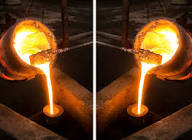
The process usually begins with smelting, where raw gold ore or concentrate is exposed to extreme heat in a furnace. This separates gold from heavier impurities and produces a semi-pure form of metal known as doré. While smelting is essential for initial purification, it does not produce gold pure enough for international investment markets.
To increase purity, many refineries use the Miller process, a fast and efficient method where chlorine gas is introduced into molten gold. This removes most base metals and impurities, producing gold that is approximately 99.5% pure. The Miller process is widely used in large-scale refining because it is cost-effective and suitable for high-volume production, although further refinement is still required for investment-grade bullion.
For maximum purity, the Wohlwill process (electrolysis) is used. This is the most advanced refining method in the industry and is capable of producing gold with a purity of 99.99% (24K standard). In this process, impure gold is dissolved in a chemical solution, and pure gold is deposited layer by layer onto a cathode using electrical current. The result is extremely high-purity gold that meets LBMA (London Bullion Market Association) standards, making it acceptable in global financial and bullion markets.
In 2026, the gold refining industry is also moving strongly toward eco-friendly and sustainable refining practices. Many refineries are now eliminating harmful chemicals such as mercury and replacing older methods with closed-loop systems that reduce emissions and waste. This shift is driven by global ESG (Environmental, Social, and Governance) requirements, as investors increasingly demand ethically sourced and environmentally responsible gold.
Modern refineries are also adopting energy-efficient furnaces, emission control systems, and digital monitoring technologies to improve transparency and reduce environmental impact. Some facilities are integrating real-time tracking and digital traceability systems, allowing buyers to verify the origin and refining process of gold from mine to final bar.
In simple terms, today’s gold refining process is no longer just about purity it is about trust, transparency, and sustainability. From smelting to electrolysis and eco-refining, the industry has evolved into a highly controlled system that ensures every gold bar is not only pure but also responsibly produced and globally verifiable.
Regulatory Landscape: SADPMR and LBMA Compliance (2026 Guide)
- The South African gold refining industry is governed by a strict legal and international compliance framework designed to ensure trust, transparency, and global acceptance of gold exports.
- The Precious Metals Act of 2005 is the core law regulating all activities involving gold, including mining, refining, trading, and export.
- The Act requires that all participants in the gold value chain must be licensed, registered, and regularly audited to prevent illegal trade and smuggling.
- It also ensures that all gold entering the formal market is traceable, legally sourced, and properly documented from origin to export.
- The South African Diamond and Precious Metals Regulator (SADPMR) is the official body responsible for enforcing this law in 2026.
- SADPMR issues licenses to refiners, monitors gold trading activities, and conducts compliance inspections across the industry.
- It works closely with customs and law enforcement agencies to prevent illegal gold exports and protect the integrity of the national gold supply chain.
- On the international level, LBMA (London Bullion Market Association) compliance is the global benchmark for gold quality and credibility.
- LBMA-certified refineries must meet strict standards for gold purity (99.5%–99.99%), ethical sourcing, production control, and traceability.
- Gold that meets LBMA standards is automatically accepted in major global markets such as London, Dubai, Zurich, and New York without re-testing.
- In 2026, regulatory compliance is also expanding into digital traceability systems and ESG reporting frameworks.
- These systems allow every stage of gold production from mining to final refining to be digitally tracked and independently verified.
- This ensures buyers can confirm that gold is not linked to illegal mining, fraud, or unethical sourcing practices.
- Overall, the combination of the Precious Metals Act, SADPMR enforcement, and LBMA standards makes South Africa one of the most trusted gold refining jurisdictions in the world.
- For investors, this means South African gold is legally secure, ethically sourced, and globally recognized as investment-grade bullion.
The Future: Urban Mining and E-Waste Recycling (2026 Guide)
- Urban mining is the process of recovering valuable metals, especially gold, from electronic waste (e-waste) such as phones, computers, circuit boards, and industrial electronics.
- In 2026, urban mining is becoming one of the fastest-growing sectors in the global gold industry due to rising electronic consumption and increasing pressure on natural mining resources.
- Instead of relying only on traditional mining, refineries are now extracting gold from discarded electronic devices that contain trace but highly valuable amounts of precious metals.
- Modern e-waste can contain gold concentrations that are significantly higher per ton than natural ore deposits, making recycling highly profitable and efficient.
- South African and global refiners are investing heavily in advanced chemical recovery systems and high-temperature separation technologies to extract gold from complex electronic materials.
- This process reduces the need for new mining activities while supporting a circular economy model where materials are continuously reused and refined.
- Urban mining also plays a major role in improving environmental sustainability by reducing landfill waste and minimizing toxic pollution from electronic disposal.
- In 2026, many refineries are adopting closed-loop recycling systems that safely extract gold while controlling emissions and chemical waste.
- Technologies such as hydrometallurgical processing, bio-leaching, and precision electrolysis are increasingly used to recover gold from circuit boards and electronic components.
- This shift is creating a new supply stream of “recycled gold,” which is then refined to 9%–99.99% purity standards and reintroduced into global markets.
- Urban mining is also helping to stabilize the gold supply by reducing dependency on traditional mining, which is becoming more expensive and environmentally restricted.
- For investors and industries, this means a more sustainable, traceable, and diversified source of gold supply in the future.
- Overall, urban mining and e-waste recycling are transforming the gold industry into a circular, technology-driven system that prioritizes efficiency, sustainability, and long-term resource recovery.