The Gold Industry in Kenya Explained: An Ultimate Guide 2026
Gold Industry in Kenya occupies a genuinely unusual position in the global gold trade — its actual mine production is comparatively modest, yet Kenya functions as one of East Africa’s most important gold trading and export hubs. Understanding the gold industry in Kenya means separating these two distinct roles: Kenya as a producer, and Kenya as a marketplace.
This guide explains exactly how Kenya’s gold sector actually works, from the mining regions and regulatory framework to the discovery that’s poised to change Kenya’s production story entirely.

Kenya’s Gold Production: Smaller Than You’d Expect
Despite Kenya’s strong reputation as a gold trading hub, its formal gold production has historically been small. Kenya produced just 565 kilograms of gold in 2022, and official figures show a further decline to 358.8 kilograms in 2024, down from 410 kilograms the year before — figures that sit in genuinely stark contrast to neighboring Tanzania’s output of over 60 tonnes annually.
This gap doesn’t reflect a lack of underlying gold reserves in Kenya so much as decades of underinvestment in large-scale formal mining, with the bulk of Kenya’s gold historically coming from artisanal and small-scale mining rather than industrial operations.
Kenya’s Key Gold Mining Regions
Kenya’s gold-producing activity concentrates in a handful of well-known regions. Kakamega County, part of the historically productive Kavirondo Goldfields, has been mined since colonial times and remains one of Kenya’s most active artisanal gold areas. Migori County, within the Migori-Macalder Greenstone Belt, hosts both artisanal activity and increasingly, formal exploration.
Transmara contributes further alluvial and artisanal gold production, while Turkana in Kenya’s remote north has drawn growing exploration interest in recent years — our dedicated guide on gold mining in Turkana, Kenya covers this specific region’s development in depth.
The Regulatory Framework Governing Kenya’s Gold Industry
Kenya’s gold sector operates under the Mining Act, 2016, overseen by the Ministry of Mining, which governs everything from small-scale artisanal licensing to large industrial mining concessions and export permitting.
Any commercial gold export from Kenya requires an export permit, a certificate of origin, and compliance with Kenya Revenue Authority (KRA) tax obligations — a 5% royalty tax applies to the gross value of exported gold, alongside 16% VAT on refined gold specifically, with raw gold typically exempt.
Our full guide on gold exporters in Kenya covers exactly what this documentation and compliance process looks like in practice for buyers and dealers alike.
Artisanal and Small-Scale Mining: The Industry’s Real Backbone
Formal statistics understate Kenya’s true gold sector significantly, because so much of the industry’s actual activity happens through artisanal and small-scale mining (ASM). An estimated 250,000 people work directly in Kenya’s artisanal gold sector, with the broader livelihoods supported — including families and dependent trading networks — estimated at over 1 million people.
This informal sector operates alongside, rather than fully within, Kenya’s formal regulatory system, which is precisely why formalization efforts, licensing support, and buyer verification standards matter so much for anyone sourcing Kenyan gold — our guide on how to buy gold bars in Kenya covers the verification steps that matter most given this informal-formal split.
Kilimapesa Gold Mine: Kenya’s Longest-Running Formal Operation
Kilimapesa Gold Mine, in Narok County within the historically productive Migori Archaean Greenstone Belt, is Kenya’s longest-running modern commercial gold mine, established in 2009 and currently operated by Imara Gold.
This shallow underground operation, combined with a heap-leach circuit for lower-grade ore, holds a JORC-compliant resource of 705,000 ounces — a genuinely meaningful reserve by Kenyan standards, though modest against the scale of Tanzania’s major mines.
The West Kenya Project: A Genuine Turning Point
This is the single most significant development in Kenya’s gold industry today, and it’s poised to fundamentally reshape Kenya’s production story.
The West Kenya Project, operated by Shanta Gold Kenya Limited — a subsidiary of London-listed Shanta Gold, acquired from Barrick Gold in 2020 — centers on the Isulu-Bushiangala deposit in Kakamega County, holding an estimated 1.27 million ounces at an exceptional average grade of 11.43 grams per tonne.
The broader project resource stands at 1.76 million ounces, backed by a $510 million investment commitment, with the potential to produce over 100,000 ounces annually at full production.
Once operational, this single project is projected to lift Kenya’s national gold output from under 1 tonne to somewhere between 5 and 10 tonnes annually — a genuine step-change that would reposition Kenya as a serious East African gold producer, not just a trading hub.
Kenya as a Regional Gold Trading and Export Hub
Kenya’s gold industry’s real strength today lies less in production volume and more in its role as a regional trading and export hub. Nairobi’s established banking infrastructure, Mombasa’s port access, and a deep network of licensed dealers make Kenya a natural conduit for gold moving from across East Africa toward international buyers in the Middle East, Europe, and Asia.
Our guides on gold for sale in Nairobi and gold bars for sale in Mombasa cover exactly how this trading infrastructure functions in Kenya’s two largest gold-trading centers.
Kenya’s Gold Products: Bars, Coins, and Bullion
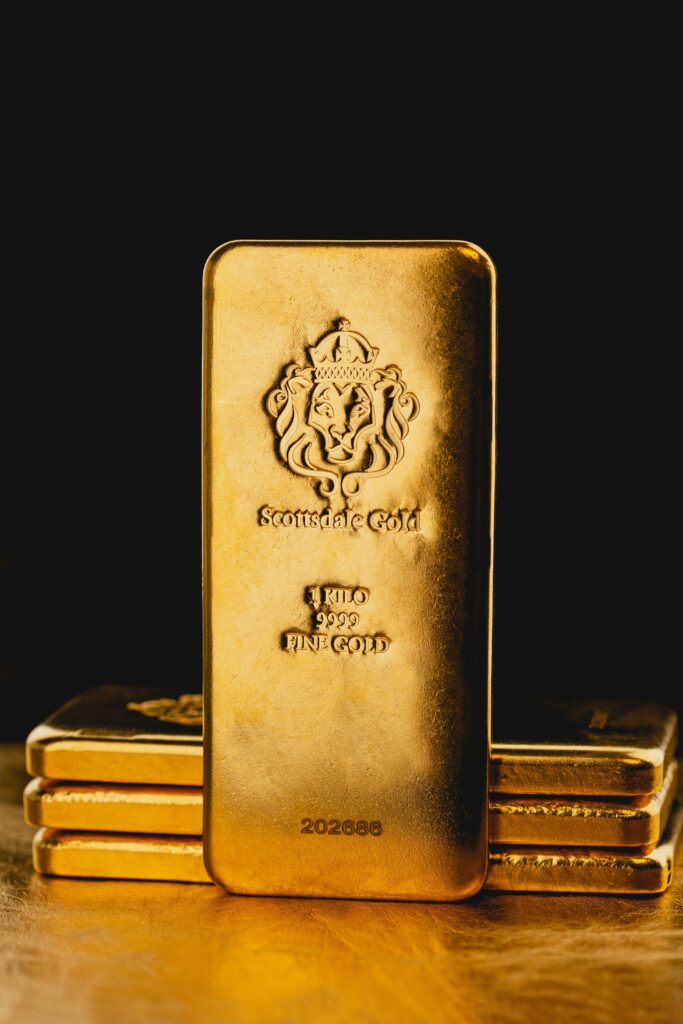
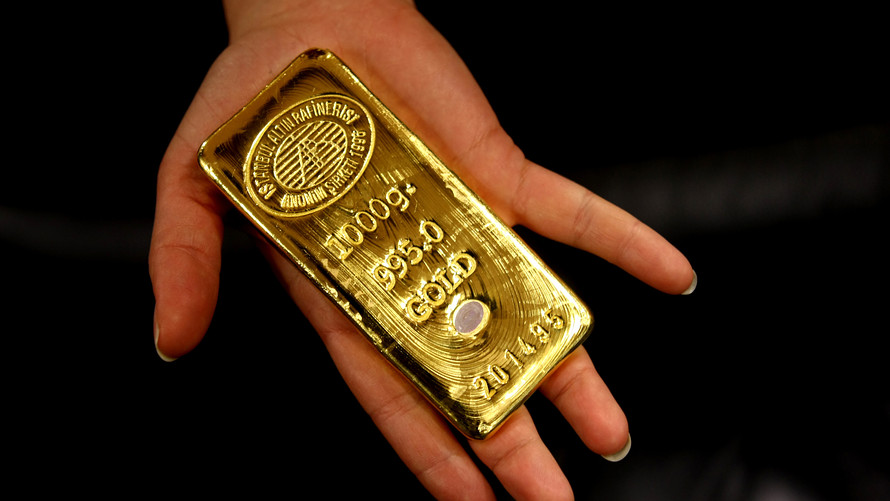
Kenya’s domestic gold market spans the full range of products international buyers expect — certified 24K gold bars, investment-grade bullion, and collectible gold coins, including South African Krugerrands and locally minted cultural pieces.
Our guides on buying gold coins in Mombasa and buying gold bullion online in Kenya cover this product range in full, alongside our 1kg gold bullion price in Kenya guide for wholesale-specific buyers.
The Future of Kenya’s Gold Industry
Kenya’s gold industry sits at a genuine inflection point. Formal production has been modest for decades, but the West Kenya Project alone threatens to multiply Kenya’s national output several times over within the coming years, while ongoing formalization of artisanal mining continues narrowing the gap between Kenya’s informal and formal gold economies.
For buyers and dealers, this means Kenya’s gold market is likely to become considerably more significant — not just as a trading hub, but as a genuine production center — over the next several years.
Looking to source certified gold from Kenya’s growing market? Browse our live gold prices in Kenya or contact our team to discuss current stock and export documentation.
FAQ: The Gold Industry in Kenya
How much gold does Kenya produce annually? Kenya’s formal gold production was 358.8 kilograms in 2024, down from 410 kilograms in 2023 — genuinely small compared to regional producers like Tanzania.
Why is Kenya’s gold production so much lower than Tanzania’s? Decades of underinvestment in large-scale formal mining, with most of Kenya’s gold historically coming from artisanal and small-scale operations rather than industrial mines.
What is the West Kenya Project? A major gold development led by Shanta Gold Kenya Limited, centered on the Isulu-Bushiangala deposit in Kakamega County, projected to lift Kenya’s national gold output to 5–10 tonnes annually once fully operational.
Where does most of Kenya’s gold come from? Kakamega, Migori, and Transmara counties, alongside growing exploration interest in Turkana in Kenya’s north.
Is Kenya more important as a gold producer or a gold trading hub? Currently as a trading hub — Nairobi and Mombasa’s banking and logistics infrastructure make Kenya a key conduit for regional gold exports, though this may shift as the West Kenya Project comes online.
How many people work in Kenya’s artisanal gold sector? An estimated 250,000 people work directly in artisanal gold mining, with over 1 million livelihoods supported across the broader trading network.