How Gold Purity Is Tested – An Ultimate Guide 2026
Learn how gold purity is tested in this ultimate 2026 guide. Discover professional testing methods, including hallmarking, acid tests, XRF analysis, electronic testers, and karat measurements to verify authentic gold.
Knowing how gold purity is tested matters just as much as knowing today’s gold price per gram — because a low price on an untested bar is worthless if the gold isn’t what it claims to be.
Whether you’re buying a 24K gold bar, evaluating gold jewelry, or sourcing raw gold before export, understanding the real testing methods behind an assay certificate is what separates a confident purchase from a costly mistake.
What Does Gold Purity Actually Mean?
Gold purity is measured in karats, with 24K representing 99.9% pure gold and lower karats — 22K, 18K, 14K — containing a proportionally smaller share of gold alloyed with metals like copper, silver, or zinc. Purity is also expressed as fineness: 999 for 24K, 916 for 22K, 750 for 18K.
Every reliable gold purity test is ultimately trying to answer one question — how much of what you’re holding is actually gold, and how much is something else entirely.
Hallmark and Stamp Verification
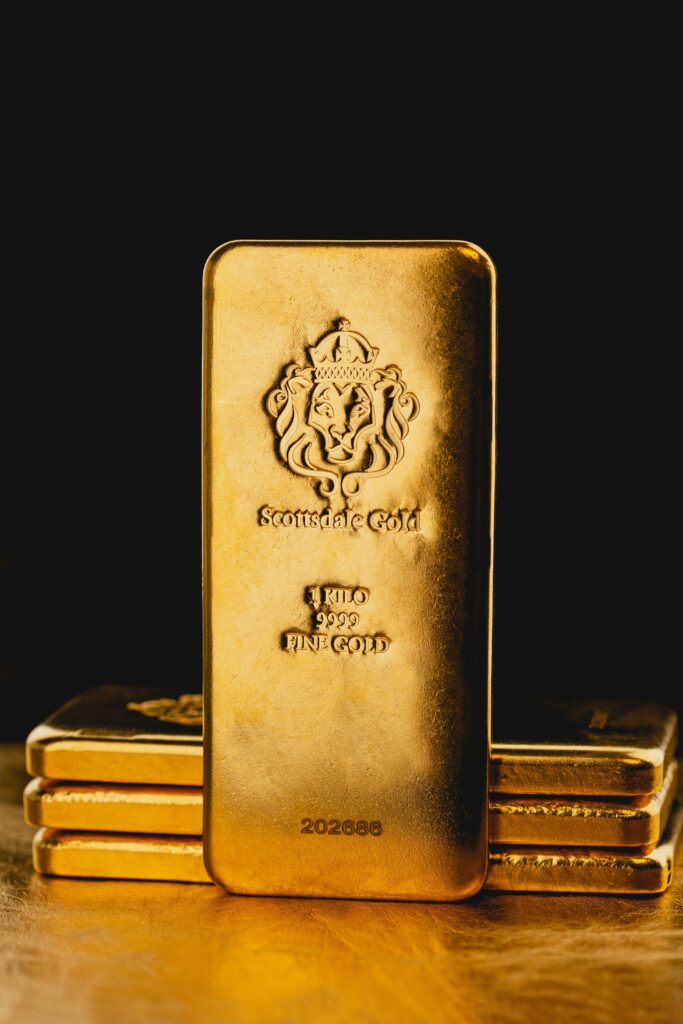
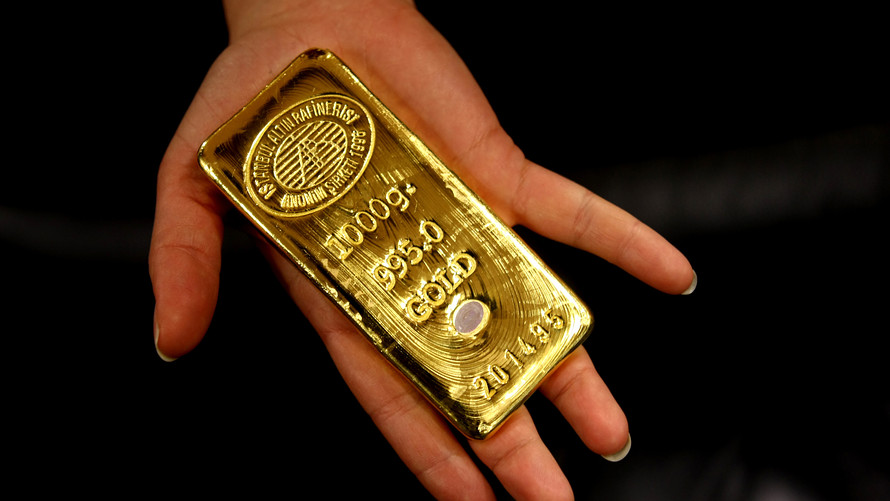
The first, simplest check on any gold bar or piece of jewelry is the hallmark — a stamped mark indicating purity (999, 916, 750), along with a serial number and, on bars, the refiner’s or dealer’s mark.
A missing or inconsistent hallmark is an immediate red flag, but a stamp alone isn’t proof of purity on its own — hallmarks can be forged, which is exactly why legitimate dealers back every stamped bar with independent lab verification rather than relying on the mark alone.
XRF (X-Ray Fluorescence) Testing
X-ray fluorescence, or XRF testing, is the industry-standard method for non-destructive gold purity testing. An XRF gun fires X-rays at the metal’s surface, and the machine reads the resulting fluorescence to identify the exact elemental composition — gold content alongside any alloyed metals — in seconds, without damaging the piece. This is the method most reputable dealers use for on-site verification, since it delivers lab-grade accuracy instantly and works on bars, coins, and jewelry alike.
XRF does have one limitation worth knowing: it reads only the surface of the metal, so a gold-plated fake with a solid base metal core could, in theory, pass a surface-level scan. That’s why serious buyers pair XRF testing with a full assay certificate for anything beyond a quick spot-check.
Acid Testing
Acid testing is one of the oldest gold purity tests still in regular use. A small scratch is made on the metal against a testing stone, and diluted nitric or acid solutions of varying strength are applied — 24K, 22K, 18K, and 14K gold each react differently, with lower-purity gold dissolving more visibly under weaker acid concentrations. It’s inexpensive and fast, but destructive at a small scale (leaving a mark on the tested piece) and less precise than XRF or fire assay, so it’s typically used as a quick field check rather than the basis for a certified purity claim.
Fire Assay: The Gold Standard for Accuracy
Fire assay is considered the most accurate method for determining gold purity, and it’s the technique referenced whenever someone talks about a truly certified assay.
The process involves melting a small sample of the gold with lead and other reagents in a furnace, separating out the pure gold through a cupellation process, and weighing the resulting metal against the original sample weight.
Because it physically isolates the gold itself rather than reading a surface signal, fire assay delivers extremely precise purity results — which is why labs like SGS and Intertek rely on it for the assay certificates that accompany serious gold transactions.
The tradeoff is that fire assay is destructive (it consumes the tested sample), takes longer than XRF, and requires specialized lab equipment — so it’s typically reserved for certifying representative samples of bulk gold, gold dust, or doré bars rather than testing an entire finished bar piece by piece.
Electronic Gold Testers and Conductivity Testing
Electronic testers measure a metal’s electrical conductivity or resistance, comparing the reading against known values for different gold purities.
These devices are popular for quick, low-cost screening — useful for an initial check before committing to a more rigorous test — but they’re generally less reliable than XRF or fire assay, and can be thrown off by certain alloy combinations. Most professional dealers treat electronic testing as a preliminary filter, not a final verification step.
Specific Gravity (Density) Testing
Gold has a distinct density — roughly 19.3 g/cm³ for pure 24K gold — which is denser than most common counterfeit fillers like tungsten-plated cores or base metal alloys.
A specific gravity test weighs the item in air and then in water, using the displacement to calculate density and compare it against known gold purity benchmarks. It’s a useful sanity check, especially for bars and coins, though it works best as a supporting test alongside XRF or an assay certificate rather than a standalone verification method.
Why an Independent Assay Certificate Matters Most
Of all these methods, the one that actually protects a buyer is a third-party assay certificate — documentation from an independent lab like SGS or Intertek confirming the tested purity, weight, and elemental composition of the specific gold you’re buying.
A hallmark can be faked, a seller’s verbal claim means nothing, and even electronic testers can be inconsistent — but an independent assay certificate, issued before payment changes hands, is the one form of verification a buyer can actually rely on.
This is exactly the standard we hold every transaction to. As a KRA-registered Africa gold exporter, we conduct on-site XRF verification at our Westlands showroom and back every order — from a single 1 gram bar to bulk wholesale volumes — with an independent SGS or equivalent assay certificate issued before funds are released.
If you’re weighing 24K gold bars against lower-purity alternatives, our complete buying guide walks through exactly what documentation to expect at each purity level.
How to Protect Yourself When Buying Gold
Combining these methods is how a genuinely careful buyer avoids getting scammed:
- Check the hallmark as a first-pass sanity check, not a final answer
- Request XRF verification for a fast, non-destructive purity reading
- Insist on an independent assay certificate from a recognized lab before paying for anything beyond a small purchase
- Compare the quoted price against the live spot rate — a price significantly below market for the stated purity is a warning sign, not a bargain
- Buy only from a licensed, documented dealer — whether that’s a trusted bullion dealer in Nairobi or a certified regional supplier sourcing from Uganda, Tanzania, or the DRC
FAQs: How Gold Purity Is Tested
What is the most accurate way to test gold purity? Fire assay is considered the most accurate method, since it physically isolates the gold from any alloyed metals through melting and cupellation. XRF testing is the most practical non-destructive method, delivering near-lab-grade accuracy in seconds.
Can I test gold purity at home? Basic checks like a magnet test (gold isn’t magnetic) or a simple density comparison can flag obvious fakes, but they can’t confirm exact purity. For anything beyond a rough sanity check, professional XRF testing or a lab assay certificate is necessary.
Does a hallmark stamp guarantee gold purity? No. A hallmark indicates claimed purity, but stamps can be forged. Reputable dealers back every hallmarked piece with independent lab verification rather than relying on the stamp alone.
What’s the difference between XRF testing and fire assay? XRF testing is fast, non-destructive, and reads the surface composition of the metal — ideal for quick verification. Fire assay is destructive but more precise, physically separating the gold from other elements, and is the method behind most formal assay certificates.
Why does an assay certificate matter more than a seller’s claim? Because it’s independently verified. A seller’s claim about purity has no accountability behind it, while a certificate from a lab like SGS or Intertek is a documented, third-party confirmation that holds up for resale, export, and dispute resolution.
Buy Gold Backed by Real Verification
Understanding how gold purity is tested is the difference between buying with confidence and simply hoping a seller is honest. Every gram we sell — from a single 10 gram gold bar to a full 1 kilogram bar — is verified on-site through XRF testing and backed by an independent SGS assay certificate before you pay, not after.
As an established Africa gold exporter shipping certified gold bars worldwide under CIF and DDP export terms, we’ve built our reputation on documentation buyers can actually verify, not promises they have to take on faith. Contact us today or browse our gold bars for sale to buy certified, independently tested gold with full assay documentation included.
Related Pages
- Gold Price in Kenya Today Per Gram
- Buying Gold in Kenya — Complete Guide
- Where to Buy Gold in Kenya
- Best Places to Buy Gold Bars in Nairobi
- Top Gold Bullion Dealers in Kenya
- Gold for Sale Near Kenya
- 1kg Gold Bullion Price in Kenya
- Gold Mining in Turkana, Kenya
- 24K Gold Bar — 1kg
- 24K Gold Bar — 10g
- Gold Jewellery Collection
- Our Services
- About Us